

Recognizing coconut sticky rice
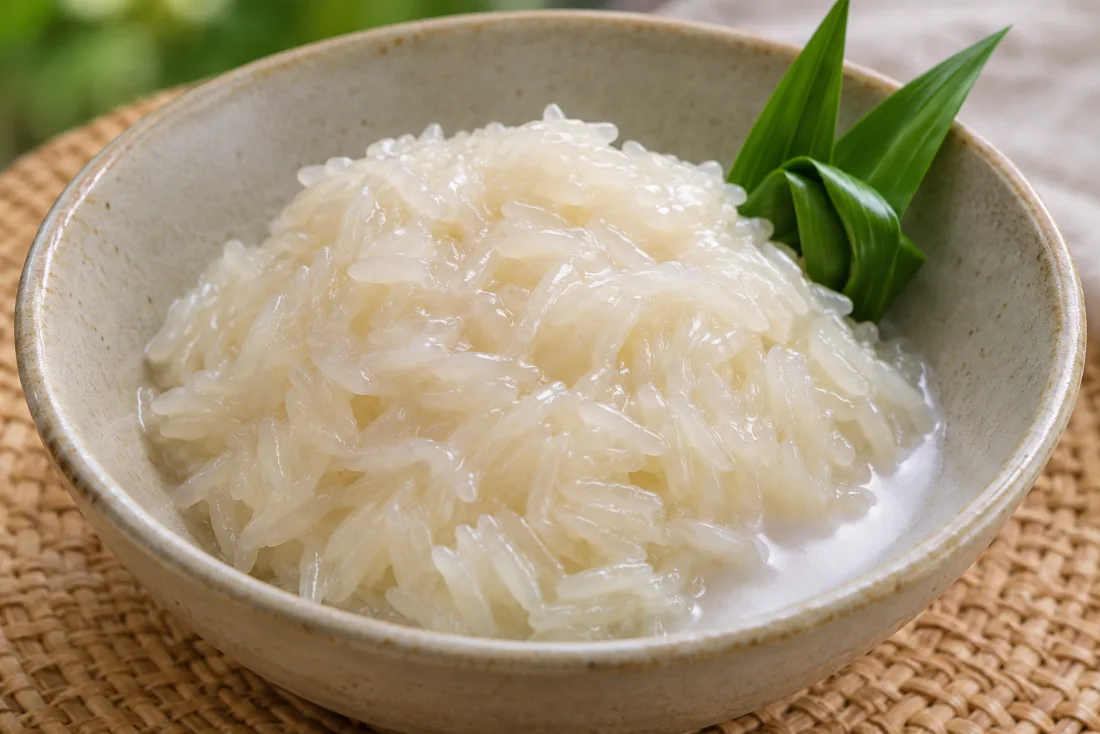
The rice looks glossy and holds together, with grains still visible. The coconut flavor has already soaked into the rice. A separate cup may contain more coconut sauce for serving.
Its place in Thai sweets
Thai cookbooks pair this rice with mango, jackfruit, durian, coconut custard or sweet shredded coconut. Some recipes serve it with a savory shrimp and coconut topping. Dessert menus can list the rice by itself.
From steamed grains to coconut rice
A plain batch uses glutinous rice, coconut cream, sugar and salt. The cook folds the coconut mixture into the hot steamed rice and lets it absorb. Some recipes blend dark glutinous rice with white rice or add pandan fragrance. A Thai recipe also uses butterfly-pea infusion to color the grains blue.
Soft, chewy and gently salty
Coconut cream gives soft richness to the chewy grains. Sugar sweetens the rice and a little salt helps its flavor stand out. A dark rice blend can have a more noticeable grain texture.
Ordering and sharing it
Ask if the portion is plain or has a topping. Banana leaves may be used for wrapping, and the extra coconut sauce can be served separately. Try a small spoonful of the rice before adding fruit or custard.
Allergens in the rice and toppings
The base contains coconut. Custard or golden egg threads contain egg, and savory shrimp topping contains crustaceans. Ask about other toppings, cream mixtures and contact through shared equipment.
If you have a food allergy, tell the restaurant before ordering and ask about ingredients, sauces and shared cooking equipment.