
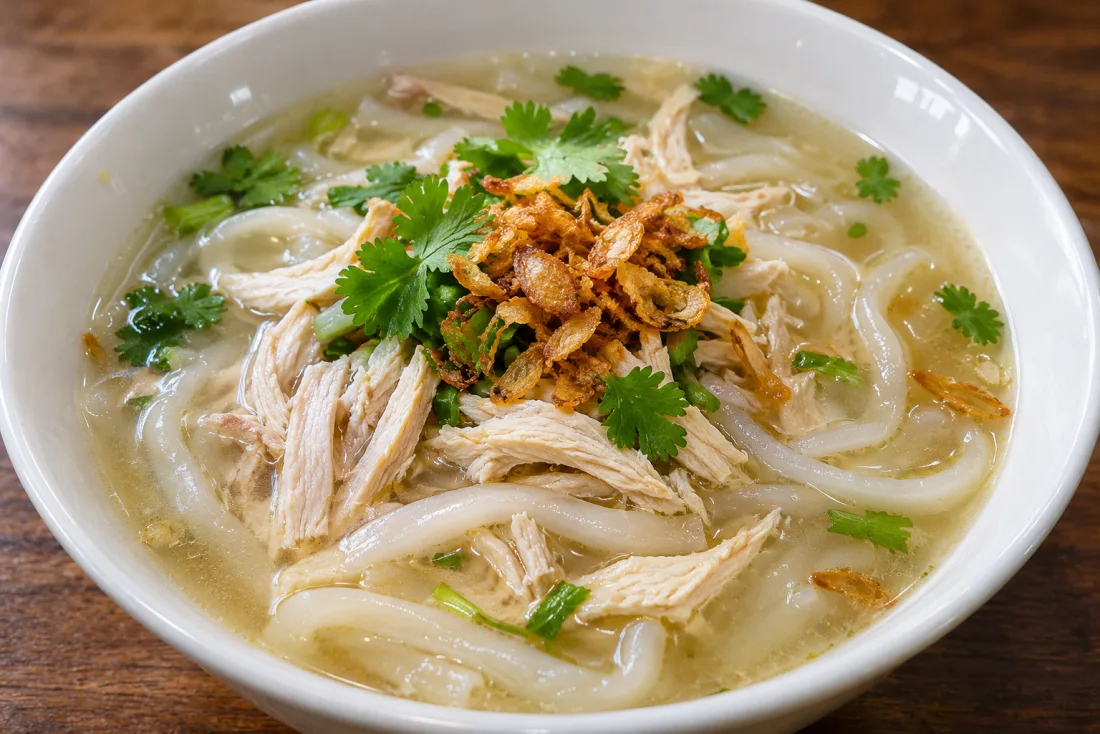

 chicken
 fish sauce
A Lao breakfast soup also found in some Thai noodle shops
The Lao dish uses cut noodles rather than whole rice grains. Chicken is one familiar version. Some kitchens use pork balls or prepared noodles, and the name can appear on menus in Thailand with Lao-style food.
Why rice flour and tapioca are combined
Rice flour gives body and tapioca gives elasticity. Knead, roll and cut the dough, or use prepared noodles. One chef simmers chicken with garlic, lemongrass, makrut leaves and galangal, strains the broth and shreds the meat. Cook noodles in the broth for a thicker result or separately for a lighter soup.
Chewy noodles and savory chicken broth
The noodles are smooth and springy. Fish sauce and pepper can season the chicken broth, and fried garlic, shallots and scallions bring different aromas. Lime and chili oil can change the flavor at the table.
Serving and sharing noodles and chicken
Portion the noodles and chicken before adding broth. Taste before adding lime, oil or fish sauce. Check for optional toppings such as meatballs and for small bones when serving shredded chicken.
Comparing rice porridge and other clear noodle soups
Chicken porridge contains whole cooked grains. Pho and Thai clear noodle soup use several other rice noodle shapes and broth styles. Tapioca-rich noodles and a slightly thickened chicken broth are markers of this version.
Allergens in fish sauce, noodles and shared equipment
Fish sauce contains fish. Rice flour and tapioca do not add wheat or egg by themselves. Check packaged noodles, sauces, stock and meatballs for other ingredients and shared noodle water or strainers. Removing toppings does not remove allergens from soup.
If you have a food allergy, tell the restaurant before ordering and ask about ingredients, sauces and shared cooking equipment.