

Recognising the rice cake
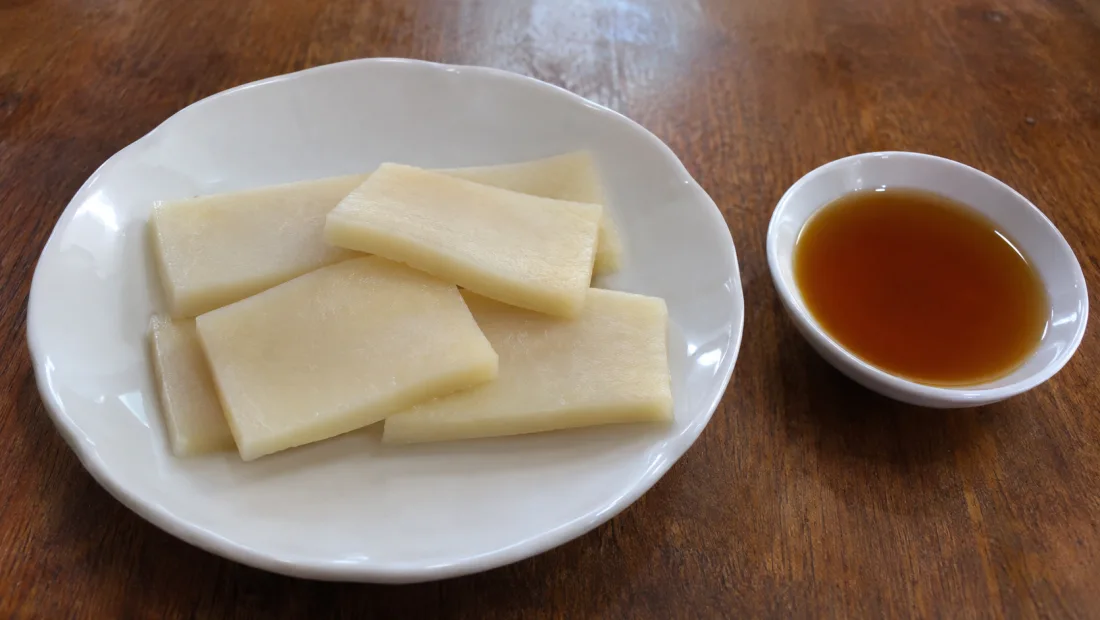
The pieces are pale and often rectangular. Pounding makes the cooked rice into a uniform, chewy paste with few visible grains. The finished cake can be plain or topped with sesame. A separate palm sugar dip and syrup poured onto the cake are both recorded.
A Bang Na Mon community tradition
Bangkok’s heritage registry records the sweet in the Mon community around Khlong Bang Na. Families shared tasks such as preparing rice, pressing coconut and pounding in a wooden mortar. Fieldwork records demonstrations with the district. Local accounts differ about where the name came from. The sweet is less often made today.
Pounding and setting the rice
Steam sticky rice until cooked. Pound it with thick coconut milk and a little salt. Accounts differ about whether the rice is still hot or left to cool briefly. Spread the paste out and cut it once it has set. The sugar can accompany the rice cake when it is served.
Coconut, salt and palm sweetness
The cake can taste lightly salty and coconut-rich, while the dip or syrup gives the main sweetness. A palm sugar syrup can leave a caramel-like note. Toasted sesame gives an extra fragrance and slight crunch. The earlier plain version focuses on rice, coconut and sugar.
Serving and choosing an image
A photo can show thin plain pieces and a dip or thicker pieces with toasted sesame and a little syrup. A leaf can line the tray for serving. State whether sesame is used and whether the sugar comes separately. Show the actual number and size of pieces.
Allergens and shared tools
The cake contains rice and coconut. Some versions contain sesame. Ask whether milk is added and whether a mortar, knife or tray is shared with other foods. Check the actual dip as well. Small portions make the sticky cake easier to chew.
If you have a food allergy, tell the restaurant before ordering and ask about ingredients, sauces and shared cooking equipment.