
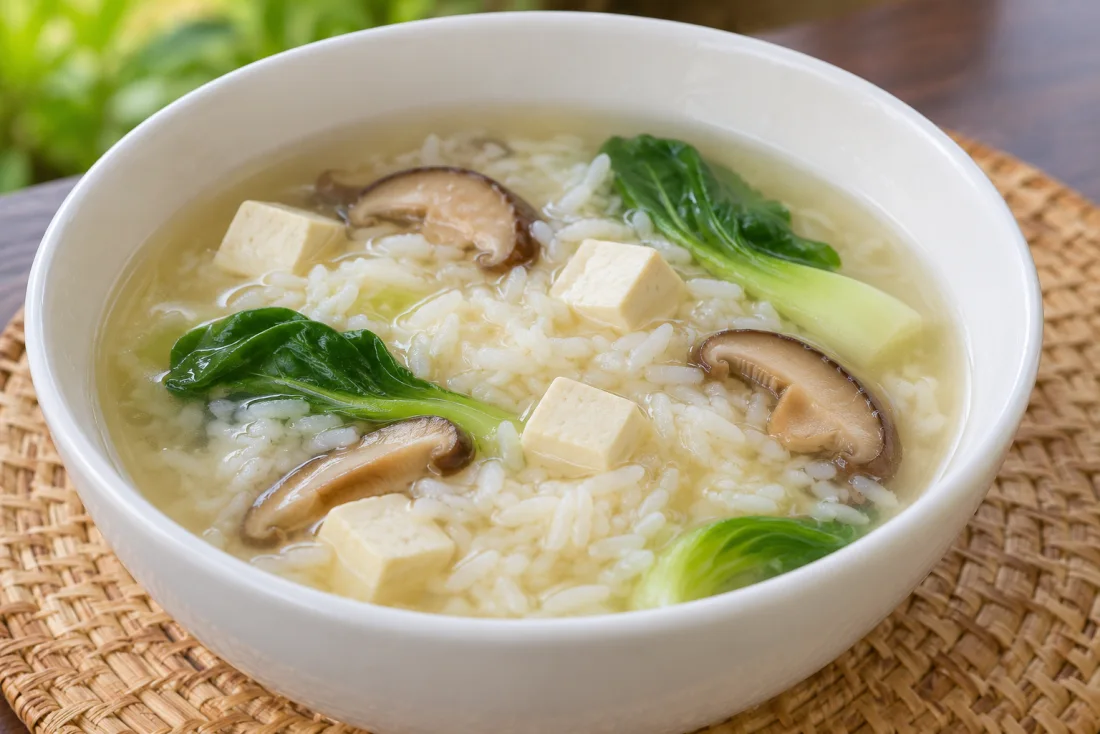

Je rice soup in Thailand
ข้าวต้ม means rice cooked in soup, with soft grains still visible. โจ๊ก is usually thicker and finer. เจ denotes a Thai religious dietary practice with a well-known festival tradition in Phuket. The dish is also made outside festival settings.
Rice, vegetable broth and additions
A home recipe uses cooked rice, vegetable stock, mixed vegetables and je light soy sauce. Shiitake and cubes of tofu are possible additions. Je calls for plant-based broth without meat stock, fish sauce or animal oyster sauce; stricter practice avoids pungent ingredients such as garlic, onion and chives.
Soft grains and mushroom aroma
Vegetable broth is light and can be naturally sweet. Shiitake deepens the savoury aroma. Rice starch can give the broth a little body without obscuring the grains. Tofu stays soft; leafy greens and mushroom slices offer different textures.
Preparing the bowl
Cook rice in vegetable broth or pour hot broth over separately cooked rice. Dried shiitake can be softened first and greens added late. Handle soft tofu gently. Brief cooking preserves a soup-like bowl with individual grains.
Ordering the bowl
Ask if the broth and sauces are made for je, especially at a shop serving meat soups. It can stand on its own or come with tofu or other je side dishes. Ask about dedicated cookware if you follow a stricter practice.
Allergens and seasonings
Tofu, soy sauce and fermented soybean paste contain soy. Some soy sauces, stock powders and meat substitutes contain wheat. Sesame oil or prepared side dishes require separate checks. Shared cookware can cause contact with fish, shrimp or egg. Je does not by itself indicate a dish is allergen-free.
If you have a food allergy, tell the restaurant before ordering and ask about ingredients, sauces and shared cooking equipment.