
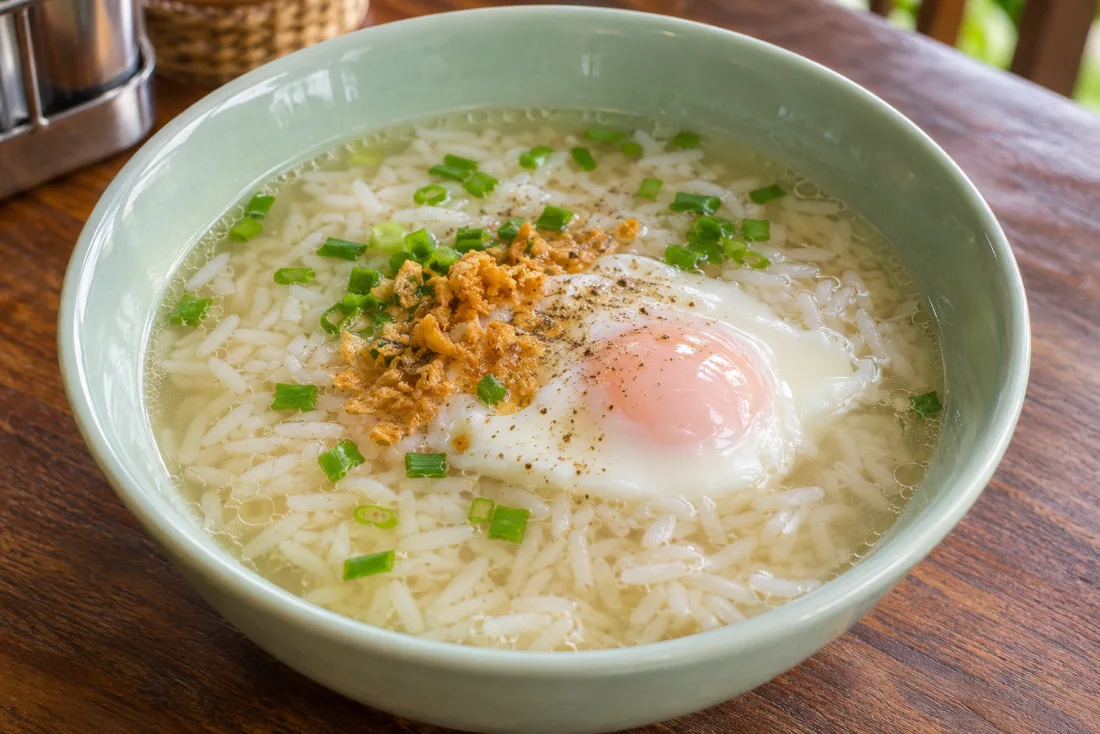

 pork stock
The Thai word names egg rather than chicken
The romanized words for egg and chicken look similar. Here the Thai name specifies egg. Rice and broth remain distinct, and a home example can include minced pork or ham depending on the broth.
Keeping the grains distinct before adding egg
Some Thai cooks combine cooked rice and broth, then add a poached egg. Others serve salted egg alongside or stir beaten egg into soup. Scallion, celery, coriander and fried garlic can season it.
Soft egg and mild rice broth
Whole eggs and ribbons spread differently through the broth. The flavor is mild with rice, garlic or pepper. Fish sauce, salt or soy can change the taste, as can a salted egg.
Eating the hot bowl and serving the egg
Taste the broth, divide rice and egg, and ask for fully cooked egg if preferred. Keep crisp garlic or condiments separate when needed and ask whether meat is included.
Egg rice soup, egg congee and chicken rice soup
Egg congee has more broken-down rice. Chicken rice soup uses chicken meat and may add egg. A plain egg soup may be served with rice separately.
Allergens in egg, stock and seasonings
Egg is present. Fish sauce adds fish and soy sauce can contain soy and wheat. Check stock and prepared seasonings and ask about shared equipment. Removing visible egg does not remove allergens from soup.
If you have a food allergy, tell the restaurant before ordering and ask about ingredients, sauces and shared cooking equipment.