

 prawn
 fish sauce
The name and how it appears on Thai menus
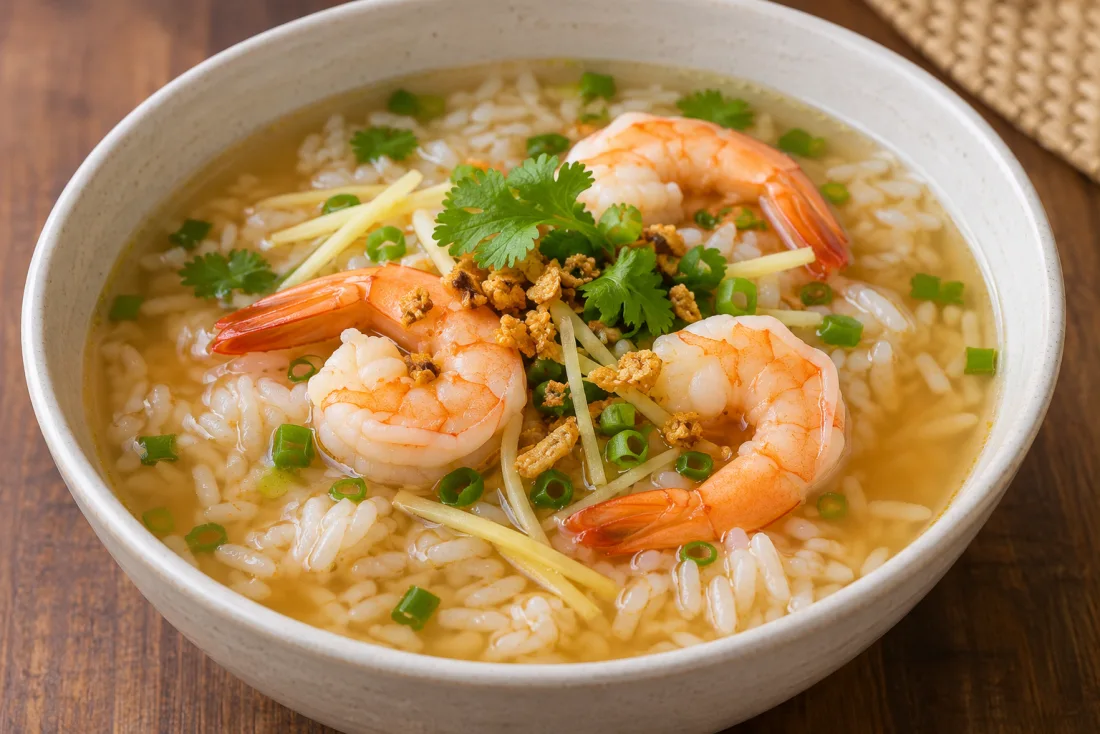
Khao tom refers to boiled rice soup, and goong means prawn. Valia Bangkok lists it on its menu, and a Thai home recipe cooks prawns with rice. Phol describes a richer shrimp-fat variation for breakfast or supper. These are documented uses rather than an origin claim.
Rice, prawns and aromatics
A home version uses cooked rice, shelled prawns, soy sauce and fish sauce. A Thai recipe booklet serves it with ginger, fried garlic, pepper, celery, spring onion and coriander. Some cooks add rice to ready-made stock, while others cook the grains in liquid from the start.
How the rice stays visible
Cooked rice softens briefly in the stock and can stay distinct. Longer cooking and stirring thicken the soup. This differs from smooth jok, where the rice breaks down more. Prawns may be placed on top and the hot soup poured over.
Broth, prawn sweetness and table seasoning
The broth is gently savoury and the prawns can taste sweet. Fresh ginger, pepper and fried garlic accent the bowl. Try the broth plain and then a little of any fermented soybean dip or chilli vinegar to check the balance.
Serving styles and the shrimp-fat variation
A light bowl can be an individual meal. Khao tom mun goong adds shrimp-head fat and usually tastes richer. Ask which version the menu offers and whether herbs and sauces can come separately for takeaway.
Allergens in broth and condiments
Prawn and prawn fat contain crustaceans, and fish sauce contains fish. Soy sauce and fermented bean dip may involve soy or wheat. Ask about prepared stock, fried garlic, condiments and shared pots or utensils. Taking the prawn out cannot remove contact with the broth.
If you have a food allergy, tell the restaurant before ordering and ask about ingredients, sauces and shared cooking equipment.