
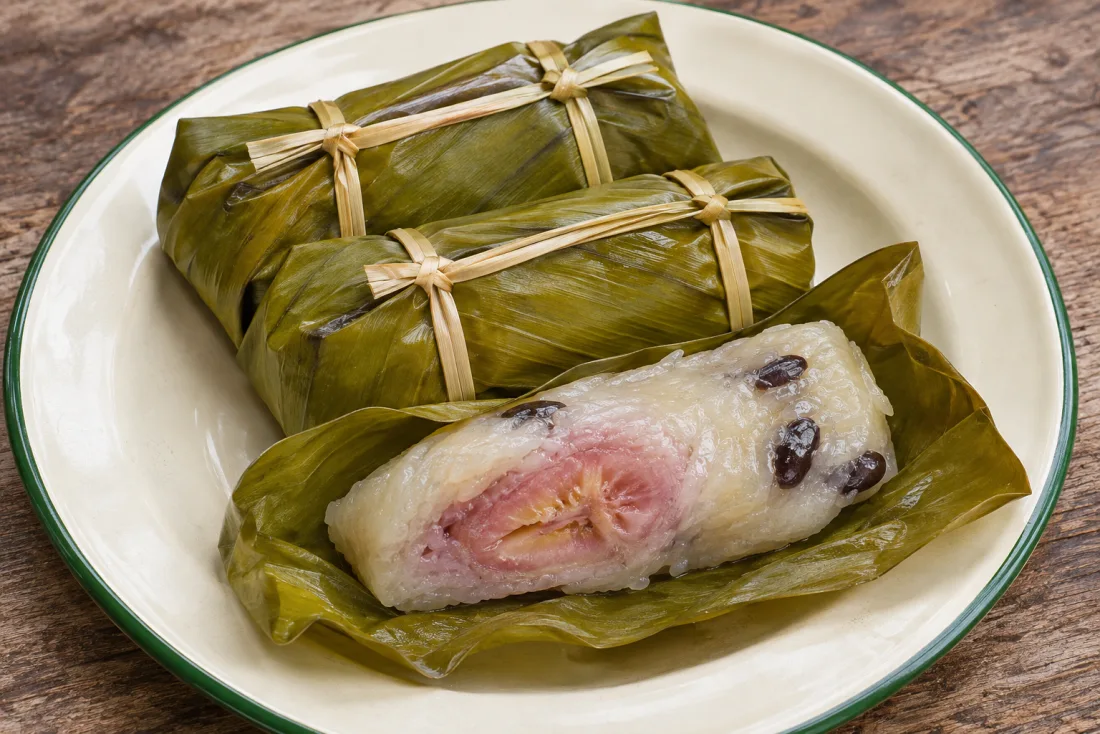

The name and regional terms
Mat refers to tying. Suan Dusit University describes the central Thai paired parcels and documents other regional names. Chulalongkorn University’s dialect archive records a range of terms. Some similarly wrapped preparations have different fillings.
Sticky rice, banana, coconut and black beans
Phol’s recipe seasons sticky rice with coconut milk and wraps it around banana and cooked black beans. The banana softens into the centre, and the beans add a separate texture. Some shops omit the beans. The leaf is the wrapper.
How tying and steaming change the parcel
Folding the leaf around the rice and tying parcels together holds their shape. Steam makes the rice cohesive while the banana softens. The leaf turns darker and softens. Let the filling settle briefly before slicing.
Coconut aroma and fruit sweetness
The rice has coconut fragrance and a little salt, and the softened banana provides fruit sweetness. Black beans bring a slightly floury texture. Taste the outer rice and the banana centre separately to see how they complement each other.
Market portions and other wrapped rice
Markets can sell pairs still tied or small opened portions. Ask whether black beans are included. A similar-looking leaf parcel may be savoury or have a different filling. A banana centre is a useful clue for this sweet version.
Allergens and shared steamers
The example uses coconut and black beans. Ask about other beans, dairy or premixed coconut products if relevant. Also ask about shared knives and steam racks. A banana leaf identifies the wrapper rather than all of the ingredients.
If you have a food allergy, tell the restaurant before ordering and ask about ingredients, sauces and shared cooking equipment.