

 shrimp
 squid
 fish sauce
What seafood rice soup means on a Thai menu
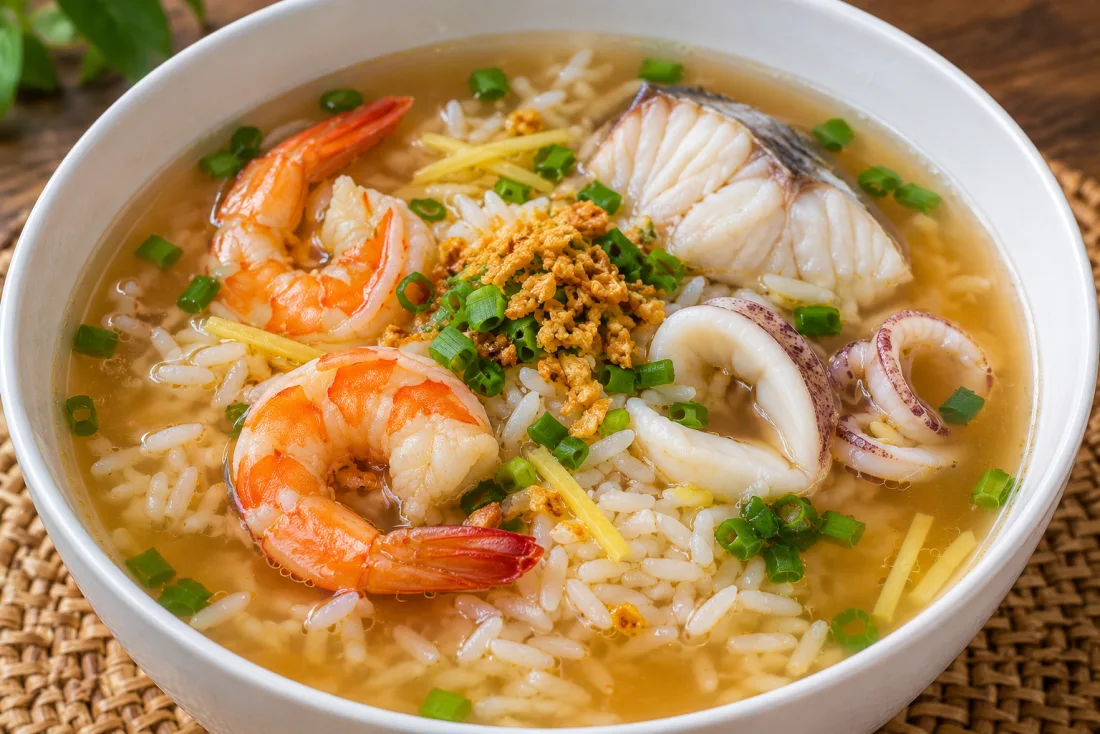
Khao tom talay describes cooked rice in soup with seafood. It can be breakfast, supper or a late meal. A Thai recipe documents shrimp, squid and fresh mackerel together. Other kitchens may change the mixture. The soft grains and flowing soup distinguish it from thick congee.
Rice, stock and different seafood flavours
Some cooks warm cooked rice in stock and others start with uncooked rice. Shrimp is tender and springy, squid has a firmer bite and fish can flake. A reference makes use of water from blanching the seafood. Fish stock and other clear stocks also occur. Garlic, coriander root, white pepper, celery, ginger or scallions can add aroma.
Cook each seafood as needed and keep the rice distinct
Seafood pieces cook at different rates. Blanch them separately or add them at different times, then combine them with the rice and hot stock. Avoid cooking them so long that fish falls apart or shrimp hardens. Add fried garlic and greens at serving. If the stock is served separately, the rice may be called khao tom haeng.
Mild seafood stock, white pepper and fried garlic
A spoonful gives warm seafood savouriness and gentle saltiness, with white pepper or ginger at the end. The rice is soft and the seafood gives different textures. Fried garlic adds a toasted note. Taste the soup before adding lime or chilli vinegar. Plain seafood rice soup generally has a milder broth than seafood tom yum.
Choosing soup, dry rice soup or fish rice soup
Khao tom talay normally comes with soup. Haeng identifies a dry serving, sometimes with a separate broth. Khao tom pla specifies fish. Ask which seafood comes with the mixed version. Condiments may be served separately. You can order one bowl for a meal or add sides according to the shop.
Allergens in the stock, seasonings and blanching pot
Shrimp contains crustaceans, squid and shellfish may contain molluscs, and fish or fish sauce contains fish. Stock can include shells or water used for several kinds of seafood. Soy sauce may contain soy and wheat, and prepared balls or toppings can add other ingredients. Ask about the broth, seasoning and shared ladles or strainers.
If you have a food allergy, tell the restaurant before ordering and ask about ingredients, sauces and shared cooking equipment.