
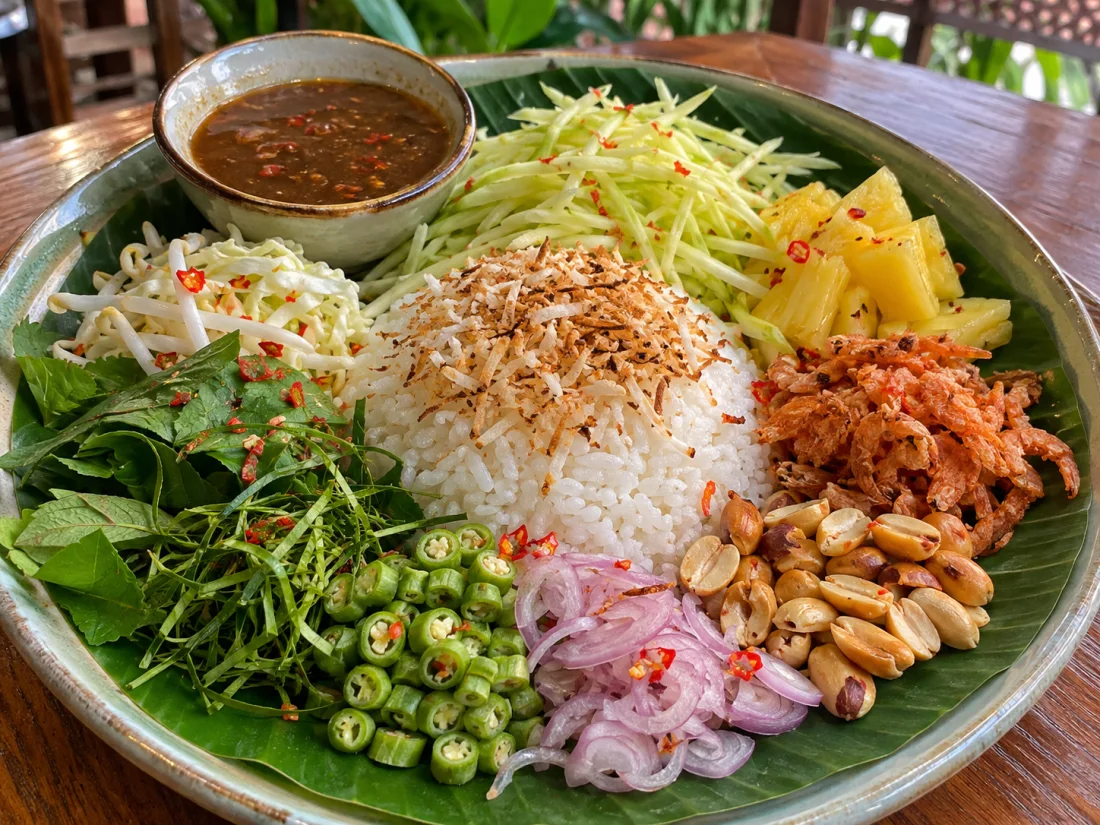

 budu fermented fish sauce
 dried shrimp
From Pattani breakfast to other southern tables
Khao yam means mixed rice. Pattani sources record it among local Thai Muslim meals, sometimes using a Malay name related to nasi kerabu. Community records also document local rice salad in Surat Thani. The ingredients vary by market and season, but the combination of rice, finely cut herbs, dry toppings and budu dressing is recognisable.
Rice, toasted coconut, budu and seasonal vegetables
Plain cooked rice or rice coloured with butterfly pea can be used. Lemongrass and makrut lime leaf give aroma. Long beans, sprouts and cucumber add crunch. Green mango, pomelo or lime adds acidity. Dried shrimp or ground fish adds savouriness and toasted coconut adds a dry crunch. Budu is fermented fish and salt. A dressing can simmer it with shallots, lemongrass, galangal and palm sugar.
Prepare each ingredient, then mix at the table
Cook and separate the rice grains. Cut the herbs, vegetables and fruit finely, and keep toasted coconut and ground seafood separate. Simmer the dressing and strain it if needed. Arrange the sides around the rice or pack them with the rice for takeaway. Spoon a little dressing in at a time. The rice is mixed without going back into a hot wok.
Savoury, tart and fragrant with adjustable chilli
Budu brings savouriness, lime and tart fruit add acidity, and toasted coconut brings a warm aroma. Dried chilli can add heat. If chilli is separate, add a little at a time, but first ask if the dressing was already cooked with chilli. The colour of the rice does not predict how hot or salty the result will be.
Rice salad, budu fried rice and serving options
Look for finely cut vegetables, toasted coconut and budu on a plate labelled southern rice salad. Budu fried rice cooks the rice and dressing together in a wok. Khao yam instead suits mixing at the table. Some shops add a boiled egg or use a different seasonal fruit. Dressing and dry seasoning may be separate, so diners can adjust the balance for themselves.
Allergens beyond visible shrimp or fish powder
Budu contains fish even when strained. Dried shrimp adds crustaceans and boiled egg adds egg. Peanuts, sesame or soy seasoning vary by kitchen. Ask about the dressing, ground seafood, toppings and shared utensils. Omitting chilli or visible shrimp does not remove fish from the dressing. A separately made plant-based dressing needs its own ingredient check.
If you have a food allergy, tell the restaurant before ordering and ask about ingredients, sauces and shared cooking equipment.