
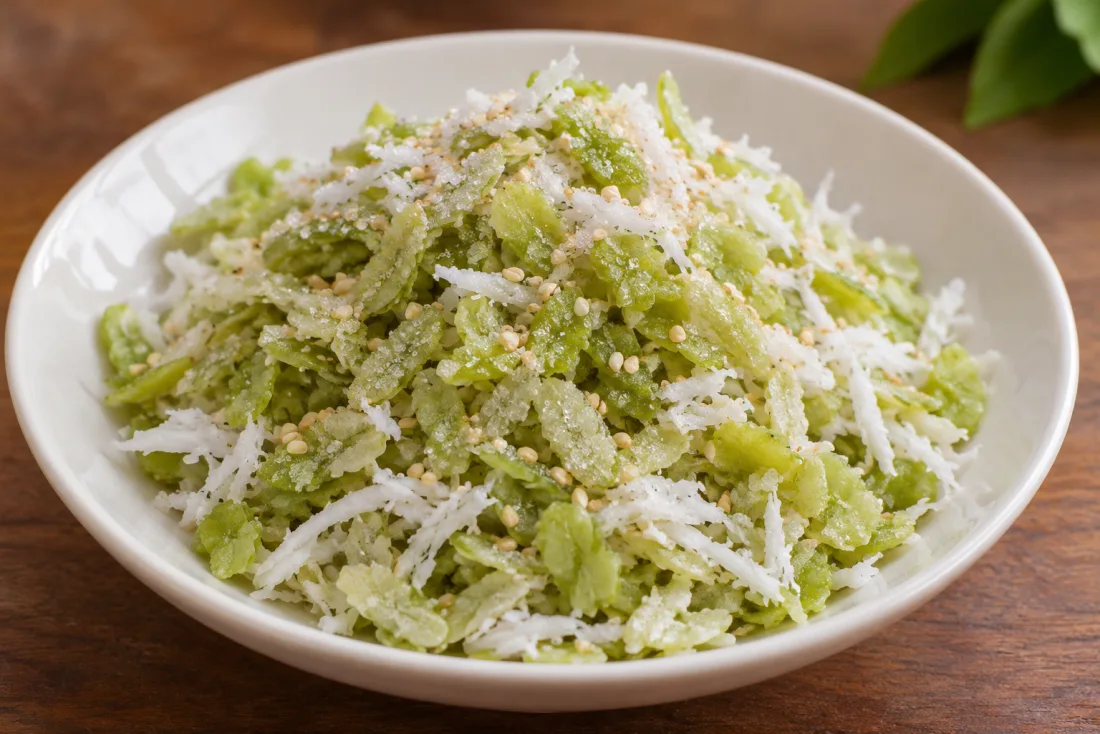

Young rice from Thai rice country
Khluk means to toss or mix. Khao mao comes from grain harvested before full maturity, then heated and pounded flat in traditional preparation. It is used in several Thai rice-growing regions. The tossed sweet usually lets you see both the flattened grains and strands of coconut.
Flattened rice, coconut and sugar
Young glutinous rice can look green, cream or brownish. Fresh flakes quickly soften, while older flakes often need more time. Grated coconut and salt balance optional sugar. Jasmine-scented water, pandan juice or toasted sesame appear in some versions.
Softening, steaming and tossing
Remove stray husks, moisten the flakes and drain them. Some recipes toss them at this point. Others steam the rice with part of the coconut, then finish with the rest. Sugar can be kept on the side. The flakes stay loose enough to spoon even if some clump naturally.
Light sweetness and distinct grain texture
The flakes give a mild grain fragrance and soft chew. Coconut adds moisture and texture, while a little salt balances the sugar. Pandan or jasmine can be noticeable depending on the preparation. Toasted sesame adds a nutty finish and another potential allergen.
How it differs from fried young rice sweets
Khao mao tod wraps young rice and coconut around a whole banana and fries it in batter. Khao mao khluk is normally a loose mixture without a fried shell. A small mound can make the mixture easy to pack, while the individual flakes remain visible.
Allergens in coconut and optional toppings
The common version contains coconut. Some cooks mix in toasted sesame, which is not always easy to see. Ask about sesame, nuts or ingredients from other sweets if relevant. Also ask about shared steamers, spoons, mixing bowls and packing trays. Once sesame is mixed through, removing the top layer does not remove it.
If you have a food allergy, tell the restaurant before ordering and ask about ingredients, sauces and shared cooking equipment.