
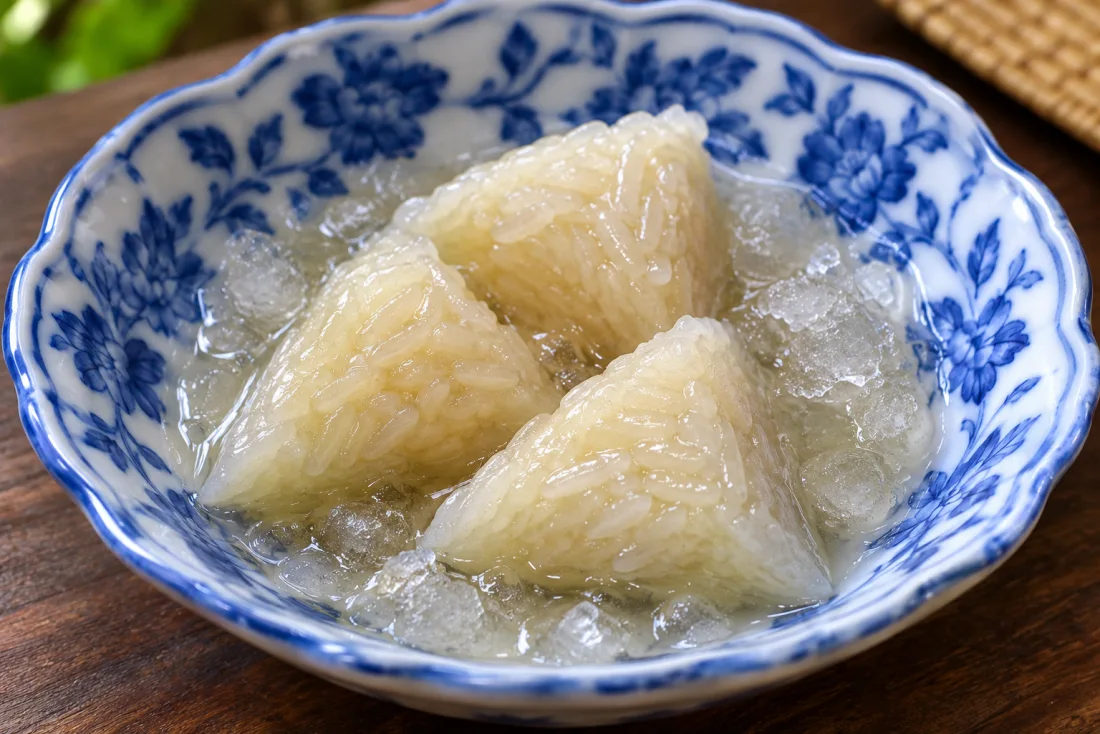

A triangle of sticky rice grains
A leaf wrapper holds the rice tight as it boils. The cooked triangle becomes slightly translucent outside and white within, with its grains visible. Despite the name, the triangle is rice rather than agar jelly. A vendor may serve them unwrapped or show one partly opened package.
A Bangkok community tradition
A Phra Nakhon cultural map documents the dessert in Bangkok’s Wat Sam Phraya community. A contemporary Thai chef also serves it with jackfruit and basil seeds, alongside older floral-syrup preparations. These are examples of practice rather than evidence of a single birthplace.
Rice, leaves and a separate syrup
The plain version uses white glutinous rice, banana leaves and clear sugar syrup. A floral-scented syrup is an option. Jackfruit and hydrated basil seeds add flavour and texture in some versions. Ice gradually dilutes the syrup.
Boiling in a tightly folded leaf
The small wrapper leaves room for the rice to swell while helping it hold its shape. After boiling the triangle is removed from the leaf and set in separately made syrup. The triangle is normally small enough to eat in one or two bites.
Cool sweetness and a chewy centre
The syrup gives the first taste, followed by compact, chewy rice. Flower-scented batches have a subtle aroma, while jackfruit brings a clearer fruit note. Unlike a banana sticky-rice parcel, the basic syrup dessert has no banana filling.
Toppings and equipment
The plain version uses rice, leaf, water and sugar. Glutinous refers to the rice’s sticky texture. Other sweets may share the syrup ladle, ice scoop or dishes, depending on the vendor, so ask about any milk, coconut, peanuts, sesame or wheat if avoiding them.
If you have a food allergy, tell the restaurant before ordering and ask about ingredients, sauces and shared cooking equipment.