
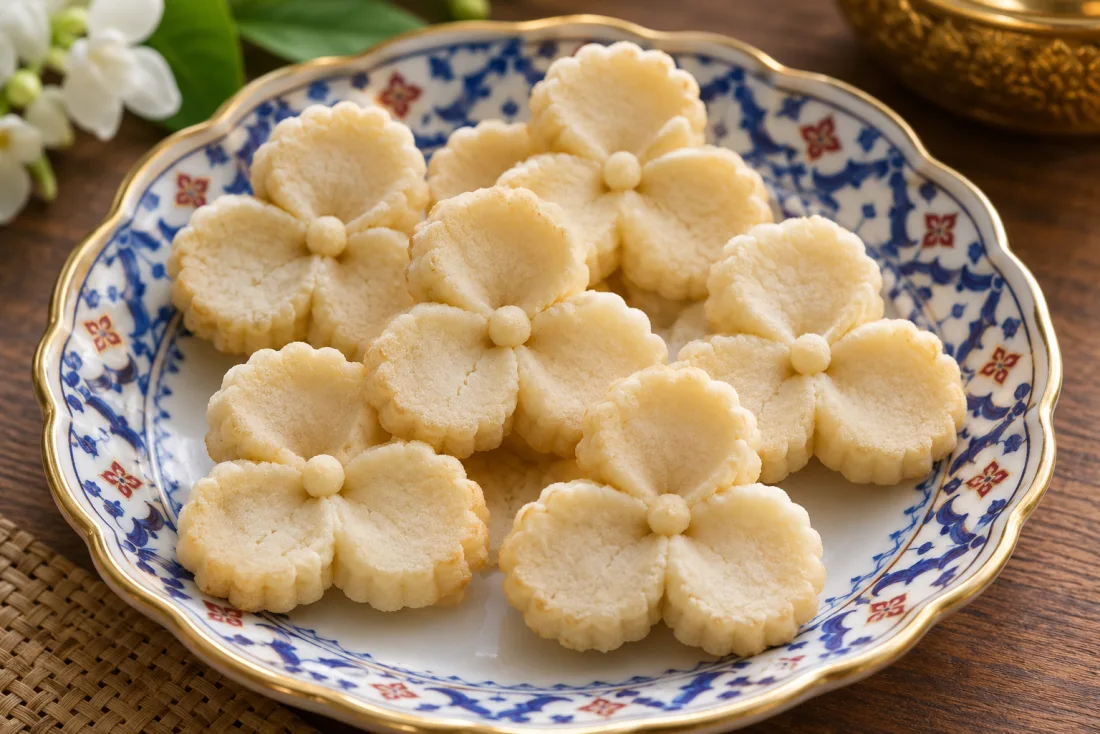

A cookie shaped like three petals
The name refers to the petals of the lamduan flower. Three thick rounded petals surround a small ball of dough. The cookies are pale cream to light gold and small enough to serve a few at a time. The three petals and raised centre give it a recognisable shape.
A Thai tea sweet and boxed gift
Thai dessert shops may sell the little flowers as tea sweets or boxed gifts. Each shape is made before baking. Culinary candle scenting is a technique used for other Thai sweets as well. The documented recipes do not establish a single province of origin.
Flour, sugar and oil
Traditional recipes use wheat flour, powdered sugar, a little salt and vegetable oil. Some mix plain flour and cake flour to affect the bite. A mild oil leaves the toasted flour and later fragrance clearer. Rice-flour alternatives are separate formulas and difficult to identify by shape alone.
Mix lightly, form the flowers and bake
Sift the dry ingredients and mix in the oil without overworking the dough. Press three petals together and attach a small centre. Similar thickness helps the petals bake evenly. After cooling, some recipes scent the cookies with a culinary candle in a covered container.
Dry and crisp, then soft crumbs
The thin edges break before the thicker centre. Fine crumbs soften in the mouth and carry a gentle toasted flour flavour and mild sweetness. Scented cookies may have a light warm aroma. Unsweetened tea makes it easier to notice the flavour and texture.
Wheat and other allergens
Classic versions use wheat. Some rice-flour alternatives can contain soy protein. Vendors may use butter or other premixes, and shared utensils or baking trays may touch egg, milk, sesame or nuts. Ask for the ingredient list and about shared equipment.
If you have a food allergy, tell the restaurant before ordering and ask about ingredients, sauces and shared cooking equipment.