
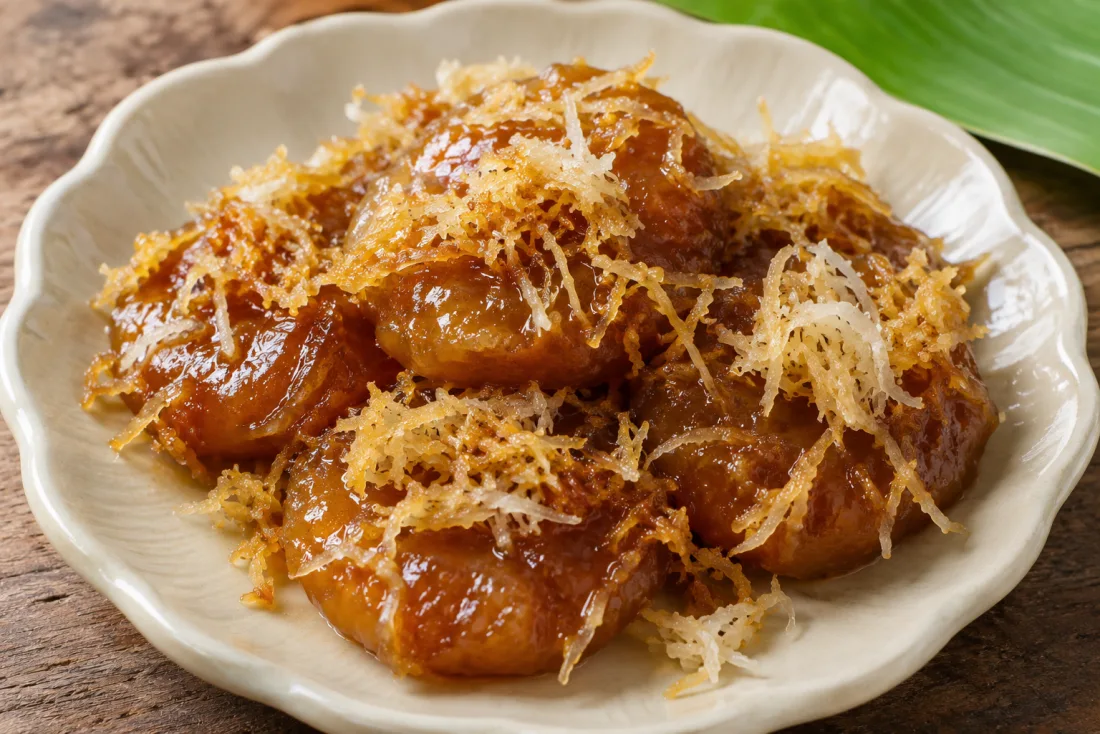

Red comes from the coconut and syrup coating
Daeng means red. Small flattened dumplings can look amber or brown on the outside and pale in the middle. They normally have no filling. The white version, khanom tom khao, is generally round and can contain a coconut filling.
A red-and-white pairing in Thai sweets
Thai culinary records describe red and white dumplings together in some traditional ceremonies. They can also be sold separately at dessert stalls. The references establish the pairing in Thai practice without locating a unique provincial origin.
Glutinous rice flour, palm sugar and coconut
The dough uses glutinous rice flour and water. Palmyra palm sugar or another sugar makes the syrup, with grated coconut stirred into it. Some recorded versions use flower-scented water and toasted mung beans. The dough is smooth compared with a sweet made from intact rice grains.
Boil the flattened pieces and coat them
Roll the dough and flatten the pieces. Boil until they float, cool and drain them. Reduce the sugar with coconut separately, then toss the cooked pieces in it. Toasted mung beans can go on top. The outer coating stays sticky and the middle remains soft.
A chewy middle with sweet coconut
The first bite brings soft rice dough and a little chew. Palm sugar can have a rounded toasted note and thick coconut strands add texture. Toasted beans give occasional crispness. Compare a red one with a white dumpling if a shop serves both.
Coconut, legumes and equipment
The recorded recipe contains coconut and may use mung beans. Ask about milk, nuts, sesame or wheat in adjacent sweets and shared equipment. Removing the visible topping will not remove ingredients already mixed into the coating.
If you have a food allergy, tell the restaurant before ordering and ask about ingredients, sauces and shared cooking equipment.