

Two Thai names for a banana fritter
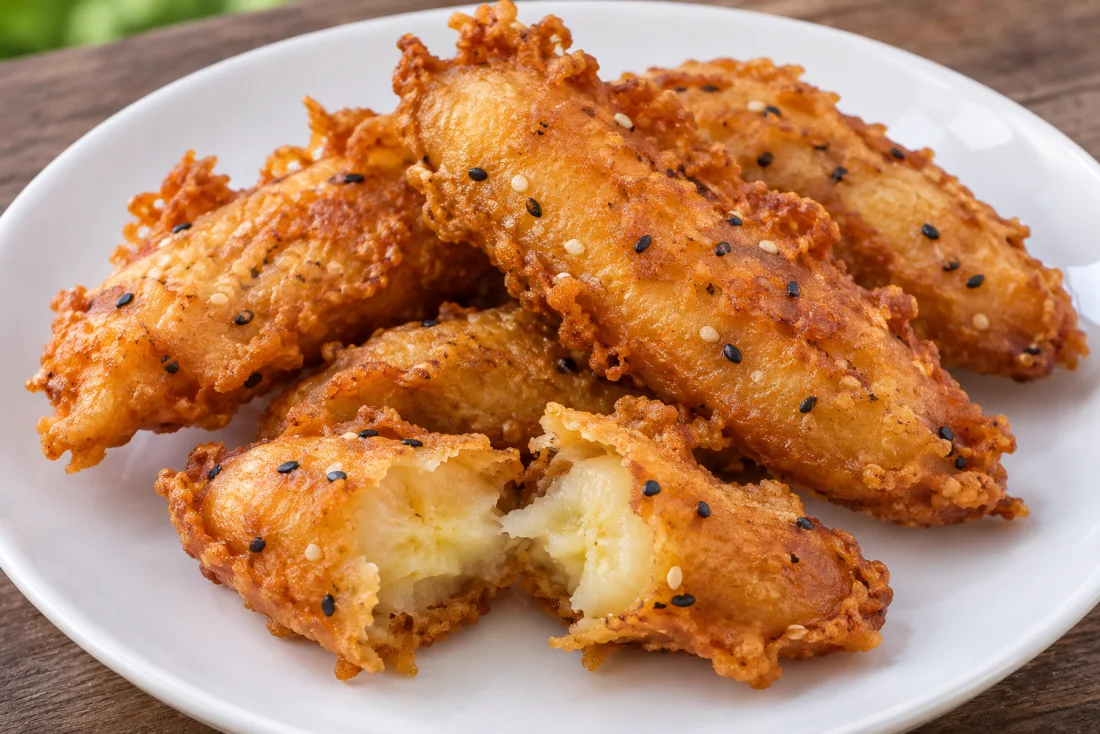
Kluay thot means fried banana, and kluay kaek is another familiar name for this battered version. A golden, slightly curved slice may have visible sesame and shredded coconut. The fruit still looks like a slice when broken open. Other Thai fritters wrap banana in a layer of sticky rice and have a different cross-section.
A small market-stall snack
Thai markets and neighbourhood stalls commonly make these in batches. KRUA documents a family batter once used for street sales. Fried taro or sweet potato may be sold beside the bananas. Portions are often scooped into a paper bag for eating while walking.
Banana, flour, sesame and coconut
Firm ripe Nam Wa bananas are a representative choice. Rice flour makes the wrapper, while coconut milk or moistened shredded coconut gives it flavour. Sesame toasts in the oil and sugar and salt season the batter. Some recipes use food-grade limewater for crispness and some add baking powder for a lighter shell.
Slice, coat and fry
The banana is sliced lengthwise and dipped in batter. Thick slices leave more soft fruit inside. Thin slices expose more crisp edge. Cooking in batches allows the pieces to stay separate and brown on both sides. A rack lets oil and steam drain away before serving.
Crisp shell with a sweet centre
The first bite is crisp and smells of toasted sesame and coconut. The centre gives way to ripe banana with a little fruity acidity. A paper bag can trap steam and soften the crust. When sold in a mixed bag, banana is softer and fruitier than the nearby taro.
Allergens and frying oil
Sesame and coconut are present in typical versions. Premixed flour may introduce wheat, milk, egg or soy depending on the vendor. Shared oil and utensils may also carry ingredients from other fritters. Ask about the batter and fryer, since the golden coating can hide what went into the mix.
If you have a food allergy, tell the restaurant before ordering and ask about ingredients, sauces and shared cooking equipment.