
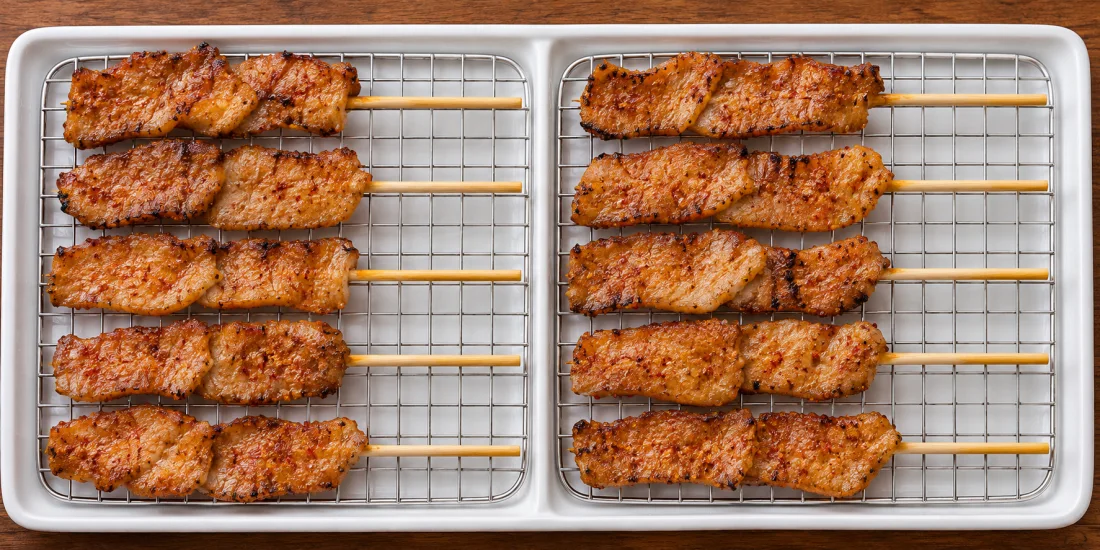

 pork collar
Reading pork collar and ten skewers on a menu
San kho mu means pork collar, yang means grilled, and mai counts skewers. A Thai vendor lists ten mala-seasoned pork collar skewers as one order. Another lists grilled pork collar among its skewer choices. Ten identifies the number of sticks, while pieces per stick and total weight vary.
A mala option at Thai skewer stalls
Pork collar can be served sliced or cooked on individual skewers. Mala is written หม่าล่า in Thai and refers to a seasoning style associated with chili heat and peppercorn tingle. A stall can apply it to several kinds of skewers. The documented ten-skewer serving is a contemporary Thai street-food option.
The pork, seasoning and finished skewer
Pieces of pork collar can show fine streaks of fat. Grilling makes the edges brown. Stalls may brush the pork with an oily seasoning or add dry spice after cooking. The finished pieces remain visibly cut meat. Rice, cucumber and extra dip depend on the set ordered.
Grill aromas, rich pork and chili
The cooked edges are toasty and the pork has a slightly springy texture. Thin streaks of fat give it a juicy feel. Chili brings warmth. Peppercorn can add a later tingle if used. Ask whether the stall can apply less seasoning or serve the dip on the side.
Showing a ten-skewer portion
Keep all ten handles visible, for example in two groups of five. Cut pork has irregular edges and should be easy to distinguish from meatballs. Separate sauce is easiest to show in a small bowl beside the skewers. Label five-piece sets and sliced pork collar separately where offered.
Allergens and shared equipment
The skewers contain pork. Marinade, spice or dip may contain soy, wheat, sesame, peanuts, fish sauce or oyster ingredients. Ask about each seasoning and whether tools and grills are shared with seafood. Slide cooked pieces off the bamboo before serving small children.
If you have a food allergy, tell the restaurant before ordering and ask about ingredients, sauces and shared cooking equipment.