

 pork neck
 fish sauce
Grilled pork neck on an Isan table
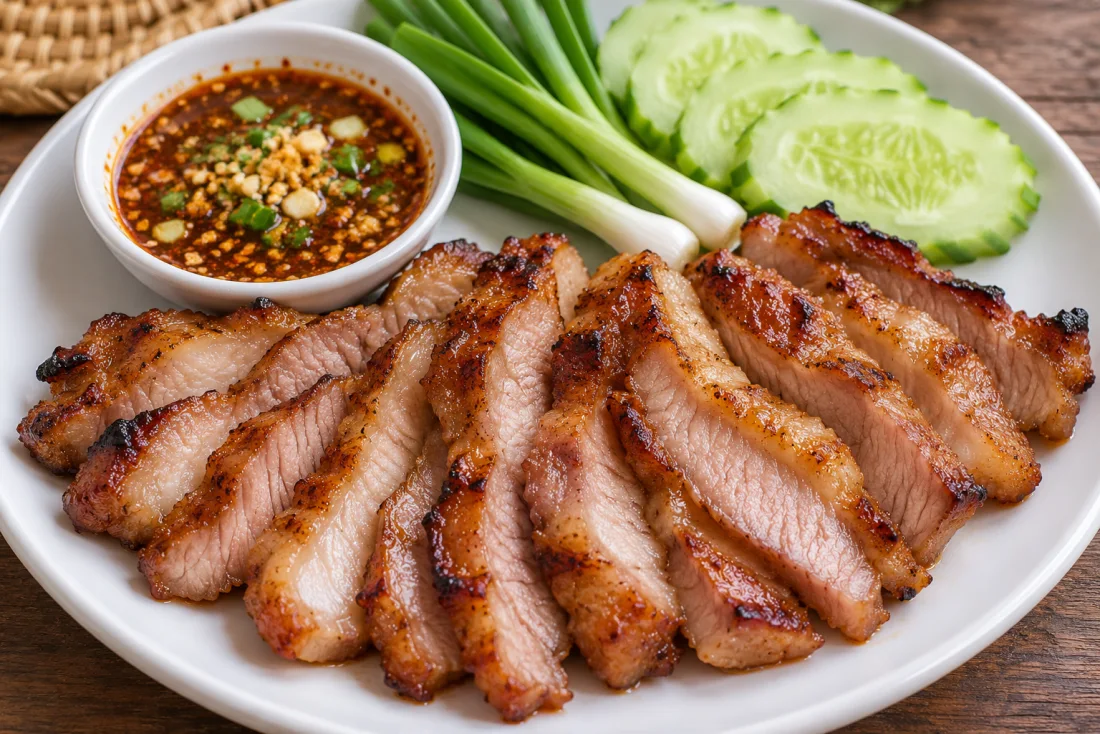
Kor moo refers to pork neck and yang means grilled. Thai cooking sources describe grilled pork neck with jaew as an Isan dish. Bangkok restaurants serve it alongside sticky rice and papaya salad. English translations may use neck, collar or jowl.
Those terms can describe nearby fatty cuts. Ask what the restaurant serves rather than assuming the cut from a translation. Sticky rice and jaew describe the usual way to eat it.
Pork, marinade and heat
Pork neck has fine lines of fat. One marinade uses coriander root, garlic and pepper, with oyster sauce, salt or sugar as other options. A recipe using coconut milk is also documented.
Cook the pork on a grill or in an oven and slice it afterward. Thickness and degree of browning vary, while the dip can remain separate.
Grilled aroma, richness and jaew
The edges may be crisp and the center juicy. Garlic and pepper scent the meat, while charcoal can introduce smoke. A thicker slice makes the fat and lean easier to distinguish.
Jaew can use fish sauce, ground toasted rice, dried chilli and lime or tamarind. Its acidity contrasts with the richer pork. Ask separately about heat in the marinade and the dip.
Sticky rice and fresh vegetables
The sliced pork can come with jaew, sticky rice, cucumber and other greens. Try a slice plain and then with the dip to compare its sweet, savory and sour notes.
Some kitchens sell a shared plate or include it in a meal with rice or noodles. Check whether rice comes separately. Each diner can choose how much sauce to use. Set the dip aside for diners who prefer plain slices.
Grilled pork, nam tok and skewers
Nam tok moo uses grilled pork too, but the sliced meat is tossed with lime, fish sauce, toasted rice and herbs. Kor moo yang usually comes with the dip on the side.
Moo ping is commonly threaded on skewers. Kor moo yang often grills a larger piece of fatty pork before slicing. Marinades and heat sources can vary.
Allergies in the marinade, dip and grill
Fish sauce can contain fish, oyster sauce can contain mollusks, and soy sauce can contain soy and wheat. Toasted rice can smell nutty without identifying whether a kitchen uses peanuts.
Ask about marinade, dip and shared tools. Leaving the dip off does not change the marinade, and a cutting board or grill can be shared. Tell the kitchen what you need to avoid.
If you have a food allergy, tell the restaurant before ordering and ask about ingredients, sauces and shared cooking equipment.