
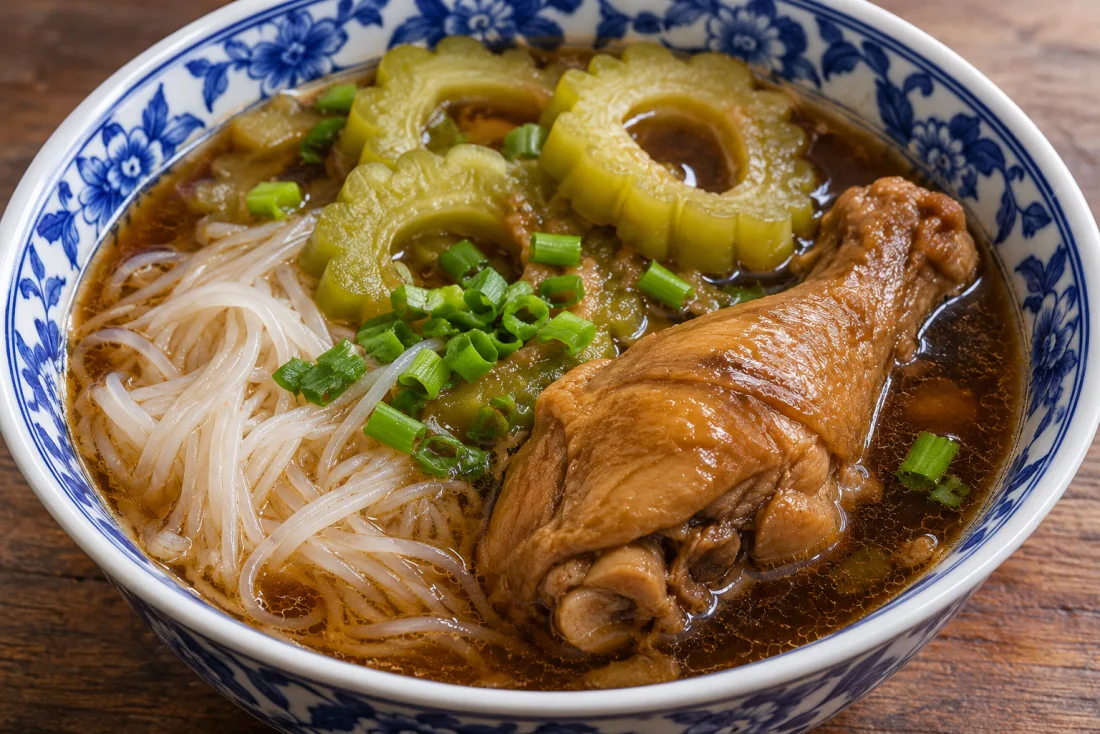

 chicken drumstick
The name on a Thai menu
Kuay teow gai covers many chicken noodle dishes. Tun mara identifies the braised chicken and bitter melon version. Shops may offer drumsticks, pulled meat and optional cooked chicken feet or blood curd. A separate vegetable or topping option can change what arrives in each bowl.
Chicken and bitter melon
A drumstick develops tender meat and soft skin as it braises. Thick bitter melon slices can cook in the broth, while lightly prepared thin slices served on the side can stay firmer. The intensity of bitterness depends on the fruit and the cook.
The aromatic brown broth
Coriander root, garlic, white pepper, star anise, cinnamon and shiitake can shape the smell. Soy sauces and a little sugar give savoury depth and sometimes light sweetness. It remains spoonable, and the brown colour comes from cooking and seasonings. Spring onion, coriander or fried garlic can add a final fragrance.
Noodles and cooked toppings
Flat thin rice noodles and round vermicelli offer different textures. Some shops also sell wheat egg noodles. Greens or bean sprouts supply a crisp edge. The amount of chicken varies, and cooked feet or set chicken-blood curd may be available as options.
Choosing the bowl
The braised chicken, spiced stock and bitter melon give a different profile from everyday clear chicken noodles. Taste the broth before adding chilli vinegar or extra peppers. Ask which chicken parts are offered and whether the melon is cooked in the broth or placed on the side.
Allergens, sauces and bones
Soy sauce contains soy and may contain wheat. Oyster sauce can contain mollusc, fish sauce contains fish, and egg noodles may contain wheat and egg. Stock powders and shared utensils may add other allergens. Ask separately about cooked blood curd, chicken feet and bones if any of those matters.
If you have a food allergy, tell the restaurant before ordering and ask about ingredients, sauces and shared cooking equipment.