
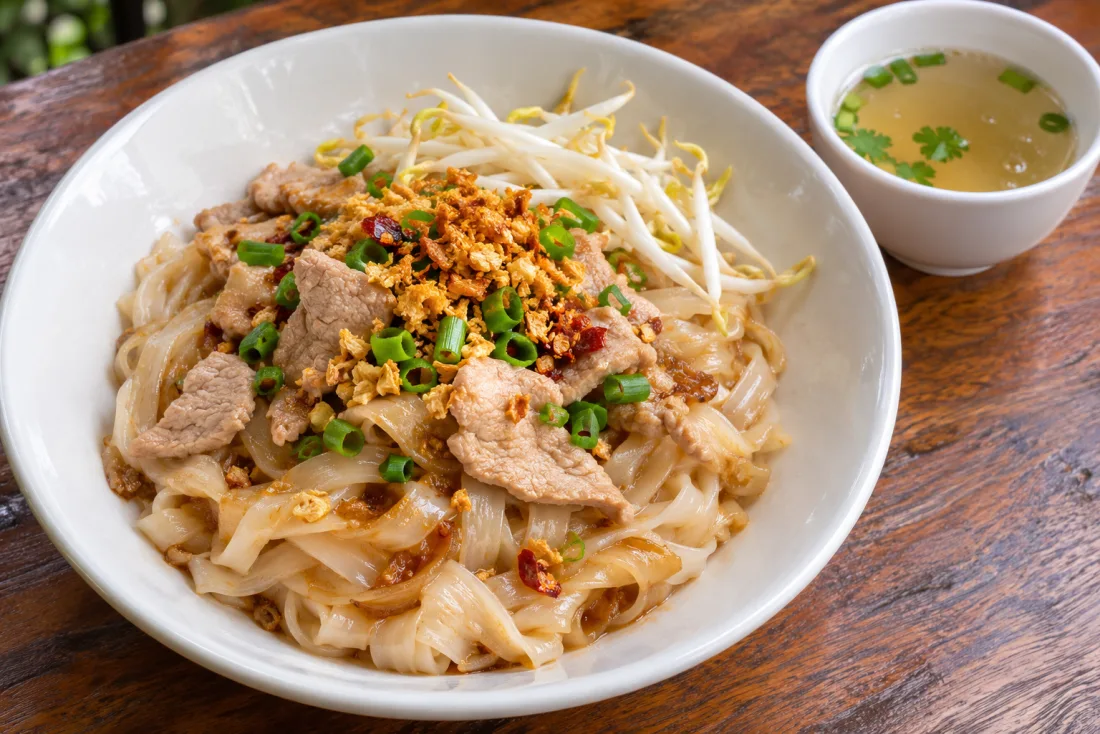

 minced pork
What dry means on the menu
Haeng describes the serving style. The noodles are tender and moist, with little or no broth poured over them. Moo identifies pork, which might arrive sliced, minced, marinated or formed into balls. Thin rice noodles are the example here, though diners can sometimes select another noodle.
An option at Thai noodle counters
This is a familiar way to order Thai noodles when the diner wants the seasoning to stay on each bite. Home formulas pair mince with cabbage or bean sprouts. A shop may identify its own marinated pork, meatballs or house sauce. The general name leaves the chili level and any Sukhothai or tom yum flavoring open.
Noodles, pork and seasoning
One home recipe puts thin noodles, minced pork and cabbage together with fried garlic oil. Another drains noodles and sprouts and tosses them in garlic oil and light soy before adding preserved greens and a little tiny dried shrimp. Sliced pork, minced pork and pork balls bring distinct textures. Scallions, cilantro and table seasonings vary.
Draining and tossing
A cook drains the noodles after blanching so the water clinging to them will not dilute the seasoning. Tossing them while warm spreads the garlic oil and loosens the strands. Briefly blanched vegetables add some crunch. As the bowl sits, the noodles absorb moisture and the fried garlic softens.
Flavor and shop variations
A soy-and-garlic bowl is usually savory, with the mild sweetness of bean sprouts and pork. Some house sauces add much stronger sweet, sour and chili notes, sometimes with peanuts. A taste of the noodles from the bottom of the bowl shows how strongly the house sauce has been mixed in.
Allergens in sauces and toppings
Soy sauce adds soy and can contain wheat. Some recipes add dried shrimp, while a shop might include fish balls, fish sauce or oyster sauce. Certain shops use peanuts, and egg noodles and processed toppings may introduce egg or wheat. Ask about the meat products, seasonings, garnishes, broth and shared blanching baskets.
If you have a food allergy, tell the restaurant before ordering and ask about ingredients, sauces and shared cooking equipment.