

 chicken
Chicken noodles at Bangkok street stalls
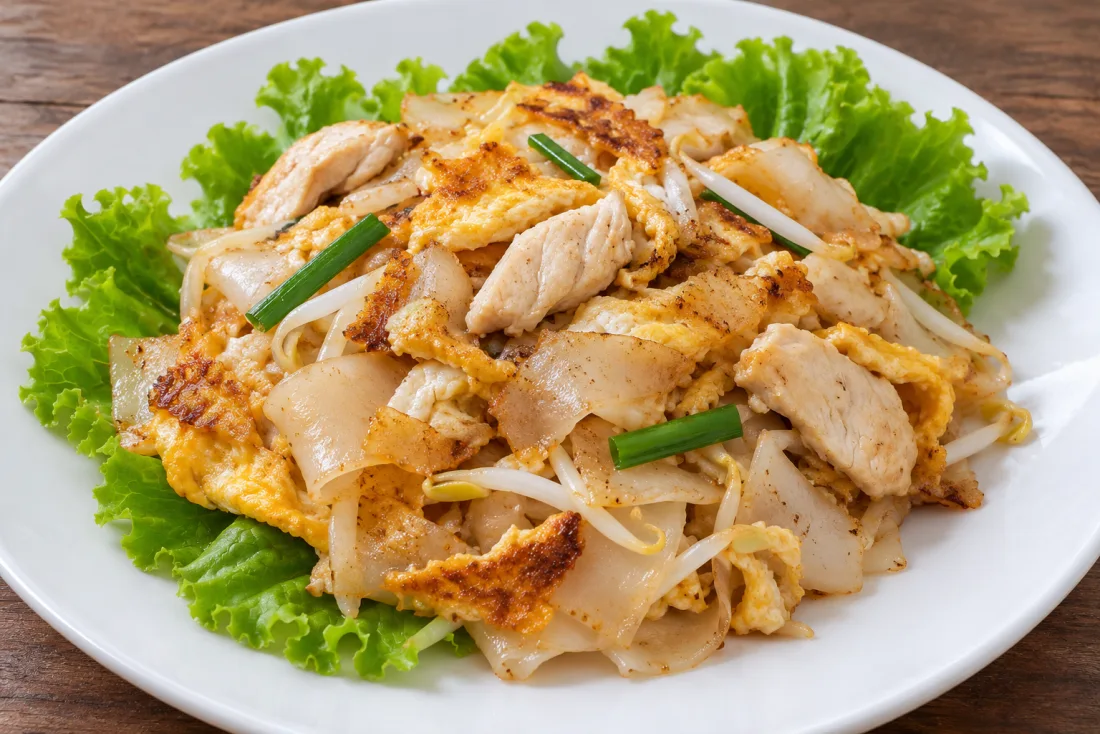
Kuay teow means noodles, kua describes toasting in the pan and gai means chicken. Thai recipes document charcoal cooking and metal woks in Bangkok’s Yaowarat area. Lettuce can go under the hot noodles when serving.
Other heat sources work as well. Check whether the menu places it among dry stir-fries or soups to get a better idea of its texture.
Fresh wide noodles, chicken, egg and optional squid
Fresh wide rice noodles can be separated and browned in the pan. Breast or thigh can be seasoned and cooked, while egg forms pieces or a thin coating on the noodles. Scallion, white pepper and soy seasoning vary.
Some Thai versions use crunchy prepared squid, preserved vegetables or pork fat. A simpler preparation can focus on chicken and egg. Lettuce adds crunch at serving. Chicken in the name does not identify the other seafood and cooking fat.
Wok aroma and crisp noodle edges
A browned exterior can surround soft, chewy noodles. White pepper adds warmth, and egg and chicken have their own cooked aromas. If the dish contains prepared squid, it can have a distinctly crisp chew.
The noodles are often gently savory, with sriracha or chilli vinegar served optionally. Browned spots do not indicate heat. Try a bite of noodles and egg before adding sauce. The crust is most distinct fresh from the wok; it softens as the noodles steam, especially where they overlap.
How to order and eat it
Noodles, chicken and egg make an individual meal. Try hot noodles with a piece of cool lettuce. Taste the crisp edges before adding sauce, or ask for the sauce separately.
Some shops cook an egg on top under a lid, making a different texture from egg tossed through the noodles. Ask about portion sizes or the type of noodle if it is not described.
Distinguishing pad see ew and soup noodles
Pad see ew can also use wide noodles and egg but often has more soy color and Chinese broccoli. Kua gai more often features chicken, lettuce and sometimes prepared squid with toasted patches. The Thai names are useful clues.
Chicken noodles can also mean a soup. Kua, browned noodles and a bed of lettuce point to the dry stir-fry. Ask whether it arrives with stock or gravy if the menu is unclear.
Egg, squid and allergens in seasonings
Egg is common. Squid and oysters are mollusks, and fish sauce can contain fish. Soy sauce may contain soy and wheat. Rice noodles do not tell you what is in a marinade. Ask about pork fat if you avoid it.
Confirm ingredients and any shared wok, utensils and sauce containers with the kitchen. Removing squid or a side of chilli sauce does not change ingredients already cooked into the noodles.
If you have a food allergy, tell the restaurant before ordering and ask about ingredients, sauces and shared cooking equipment.