
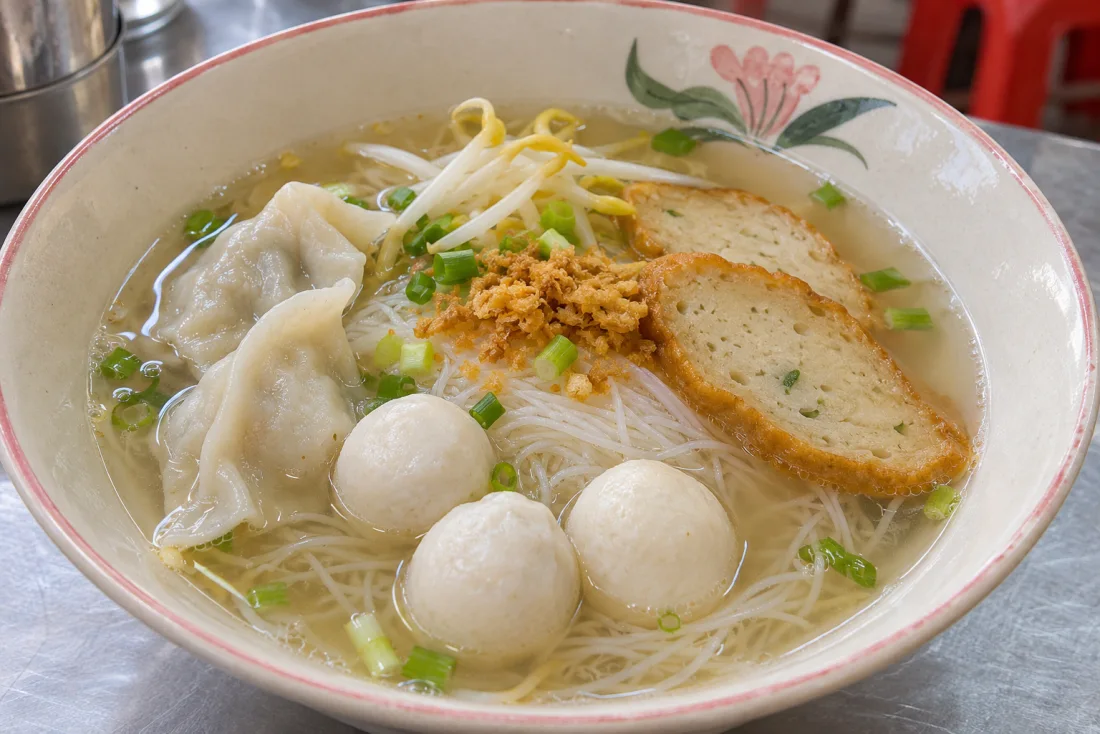

 fish balls
 shrimp balls
How to find fish ball noodles
Luk chin means a shaped ball. Pla identifies fish, while nam sai refers to clear broth. Thai-Chinese noodle shops can list multiple fish-paste preparations in one bowl. Fish slices and a plate of fish balls alone are separate choices at many shops.
Three textures made from fish
Pale round fish balls have a springy bite. Fish dumplings have folded edges and vary by producer. Hue kuai is a fish roll commonly sliced, with the outside lightly browned from frying. Optional shrimp balls and fried taro add still more textures.
The clear soup and noodles
A shop may use a clear fish stock, pork stock or a blend. Rice vermicelli, flat rice noodles or wheat egg noodles may be offered. Bean sprouts, lettuce, scallion and fried garlic can accompany the noodles. The clear stock stays light enough to sip.
Recognising the bowl and its variations
The standard fish combination can include round fish balls, fish dumplings and fish roll. Some cooks also add shrimp balls. Tom yum and yen ta fo use different seasonings, although the same toppings may appear. A dry version can be served with separate broth.
Tasting and ordering
Sip the broth first, then try a ball, a dumpling and a piece of roll. Add chilli vinegar or extra saltiness to taste. Ask whether fish roll and dumplings come in the bowl, and separate stock from the noodles on takeaway when possible.
Allergens in toppings and stock
Fish balls, fish dumplings and fish roll usually contain fish. Shrimp balls bring crustaceans. Oyster sauce can add a mollusc. Dumplings, seasoning and noodles may contain soy, wheat or egg. Tom yum versions might add peanuts. Ask about the broth and shared equipment as well.
If you have a food allergy, tell the restaurant before ordering and ask about ingredients, sauces and shared cooking equipment.