
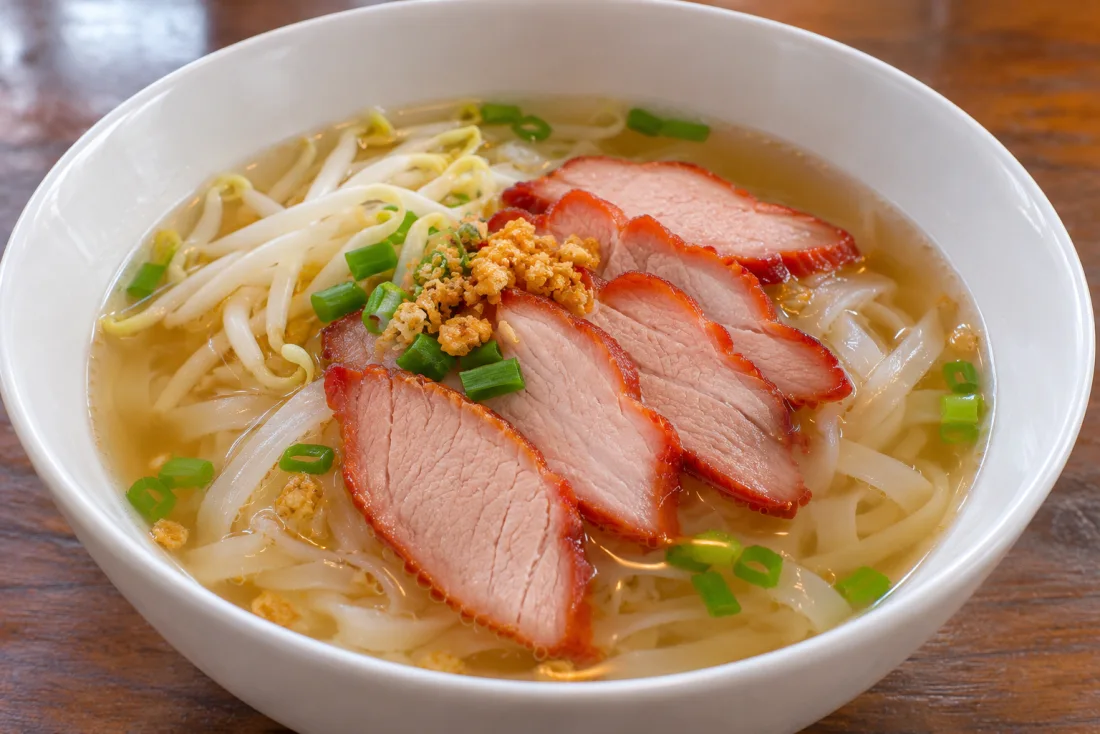

 pork stock
Red roast pork in the Thai noodle shop
Moo dang is Thai-style red roast pork. Some Thai shops explicitly serve it with rice noodles and clear stock. Roast pork can also appear in dry noodles, wonton soup and sour-spicy versions.
Preparing roast pork, stock and rice noodles
One Thai kitchen seasons pork with coriander root, garlic and pepper before roasting, and separately simmers a clear pork-bone stock. Blanch noodles and vegetables, then add broth and sliced pork. Some shops add pork balls, wontons or fried garlic.
Clear broth and sweet-savory roast edges
The broth can be light and savory with a little pepper. The pork has seasoned edges and softer interior. Rice noodles absorb broth; wide and thin strands have different textures. Taste before adding chili, vinegar or fish sauce.
Eating and sharing the bowl
Portion roast pork and any meatballs before serving the rice noodles and broth. For takeaway, ask if broth and noodles can be packed apart. Add condiments individually when sharing.
Roast pork clear noodles, wontons and rice
Wonton soup can use wheat-egg noodles and wrappers. Roast pork over rice often has a thicker sauce. Tom yum versions can include lime, chili or peanuts, while dry noodles may have stock on the side.
Allergens in marinade, stock and noodles
Marinades can contain soy, wheat, fish or sesame. Egg noodles and wrappers may add wheat or egg, and sour-spicy versions can add peanuts or dried shrimp. Check sauces and shared noodle baskets. Removing pork does not remove contact in broth.
If you have a food allergy, tell the restaurant before ordering and ask about ingredients, sauces and shared cooking equipment.