
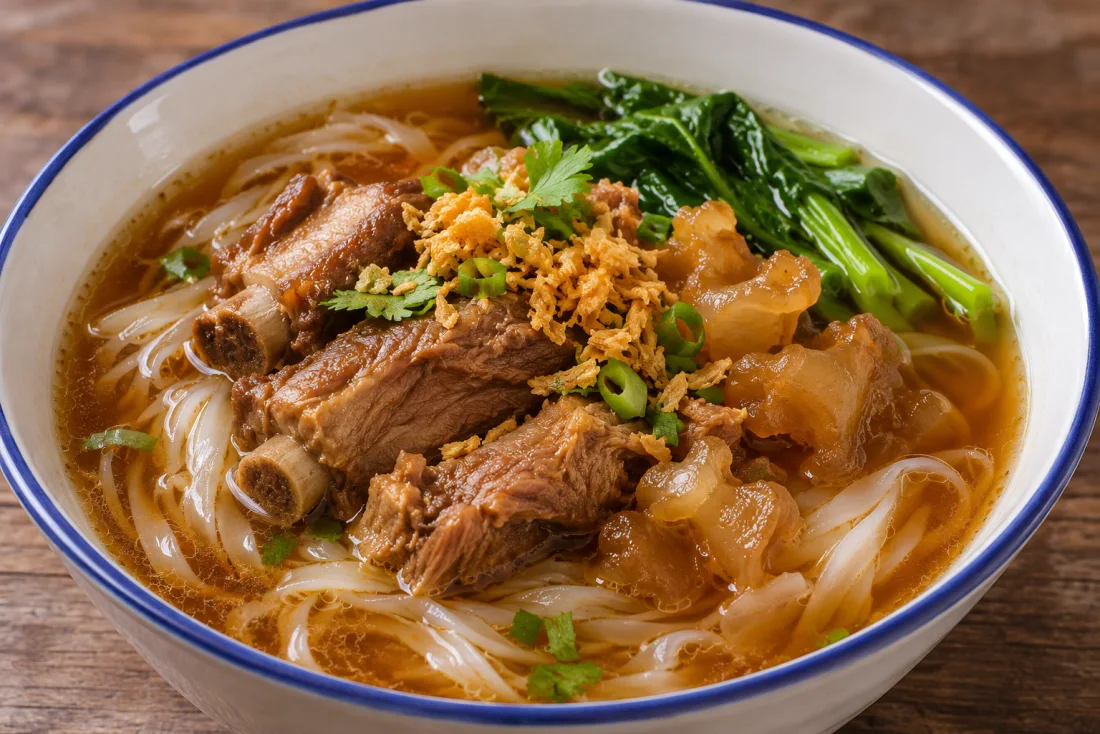

 braised pork ribs
What to look for in a noodle shop
Kuay teow moo covers pork noodles broadly. Tun identifies the braised style. Shops may offer it as a soup, a dry noodle bowl or a broth and meat bowl with no noodles. This version centres on braised meat and its fragrant cooking stock.
Tender cuts, noodles and greens
Short pieces with cartilage soften but keep a little chew. Braising cuts such as shoulder can turn fork-tender. Some shops add cooked pork balls, briefly cooked slices or liver. Fine or broad rice noodles, cooked greens and bean sprouts each bring different textures.
A clear amber braising stock
Pork and aromatics give the broth body. Soy and spices deepen the colour. One recipe combines dried shiitake with dried longan for an earthy savoury note and a sweet finish. Different shops have their own blends, and the broth stays thin enough to sip.
Rib or braised chunk versions
Tender cartilage ribs give a richer mouthful with some spring. Another bowl may use thicker cooked pork pieces and extra pork balls. Fried garlic and herbs can go on at serving. Dried longan and shiitake depend on the stock. Check for fragments of bone near the rib cuts.
Choosing the broth and toppings
Ordinary clear sliced-pork noodles emphasise a lighter broth. Tom yum versions may bring lime, chilli and peanuts. Boat noodles can include cooked blood, while colour alone cannot tell you which soup was used. Ask for broth and noodles packed separately when preferred.
Allergens in sauces and prepared toppings
Soy sauces may contain soy and wheat. Oyster sauce may contain molluscs, and fish sauce contains fish. Pork balls may contain soy, egg or other proteins. Wheat egg noodles add wheat and possibly egg. Ask about fish, peanuts and shared tools when relevant.
If you have a food allergy, tell the restaurant before ordering and ask about ingredients, sauces and shared cooking equipment.