

 pork meatballs
 fish sauce
What nam tok and luk chin tell you
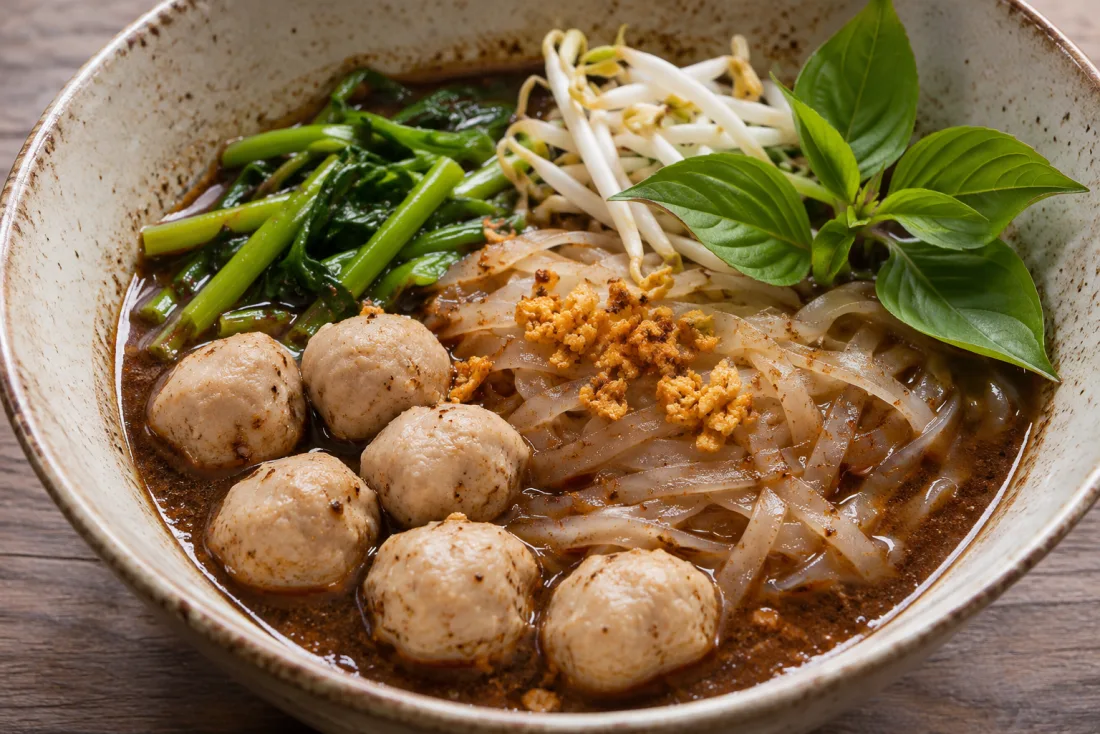
Nam tok describes the richer broth style here, and luk chin means meatballs. Pork meatballs are the focus of this version. Cooked pork blood can give broth depth and body. Noodles and garnishes vary. Ask if the balls are pork, beef or another kind.
Choosing a bowl at a Thai noodle shop
Thai recipes use pork-bone broth and cooked pork meatballs, and some also add pork slices or liver. A meatball-centered order can leave those other toppings out. Shops may offer thin and wide rice noodles. The name alone does not establish all toppings or a single origin.
Meatballs, rice noodles and aromatic broth
A Thai boat noodle recipe uses pork bones, pork meatballs, rice noodles, beansprouts, greens and cooked pork blood. Cinnamon, star anise, Thai cardamom, garlic, cilantro root and pepper give fragrance. Soy and fish sauce can add savoriness. Fried garlic and greens vary.
Cook the broth and meatballs thoroughly
Use properly sourced and stored ingredients and cook the pork blood in the broth fully. Cook the meatballs and vegetables through and use clean equipment for cooked food. Keep raw pork and blood handling separate. Serving a separate broth can help preserve noodle texture.
Warm spices and springy meatballs
The broth is full-bodied and savory, with warm spice fragrance. Pork balls are springy and rice noodles take up the broth. Bean sprouts add crunch. Chili and sour condiments can change the finish. Ask about the soup’s own heat before adding chili.
Allergens in broth and meatballs
Fish sauce contains fish. Soy sauce can contain soy and wheat. Prepared meatballs can include wheat, soy, egg, milk or fish. Ask about celery, shrimp, oyster and shared cooking water or tools. The broth and toppings can both contain pork.
If you have a food allergy, tell the restaurant before ordering and ask about ingredients, sauces and shared cooking equipment.