
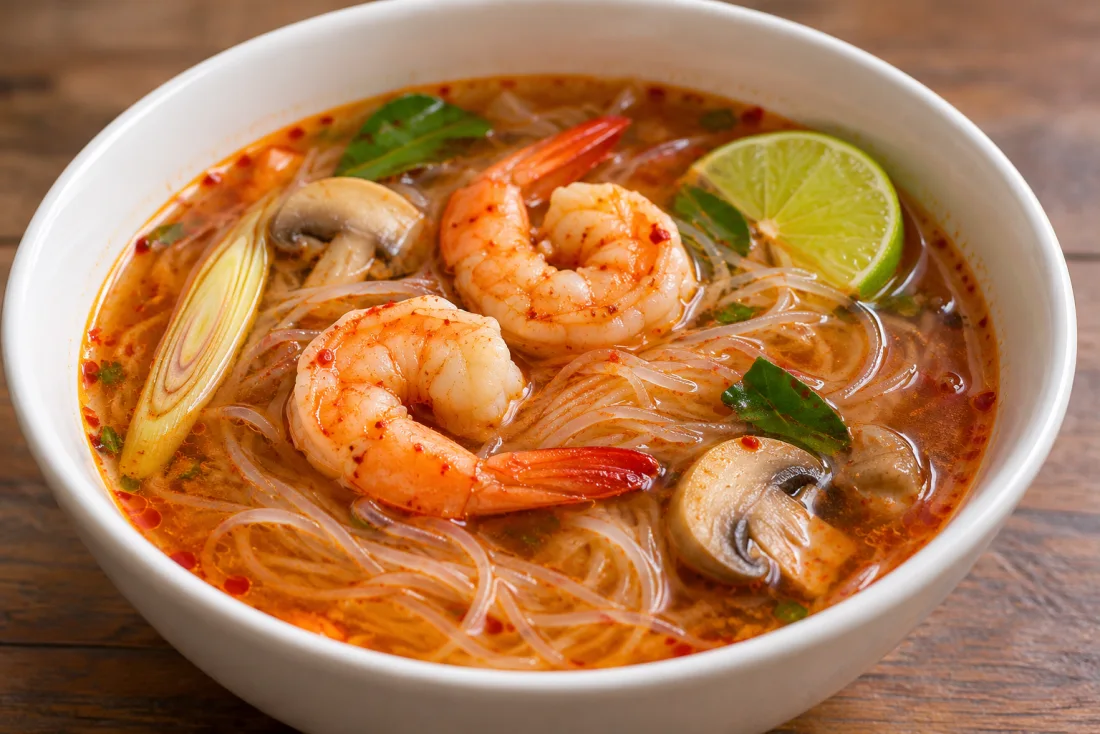

 shrimp
The soup and the noodle bowl
Thai shrimp tom yum is associated with river communities in central Thailand. Serving it with noodles makes a single bowl. Thai kitchens can use small shelled shrimp or whole river prawns and offer several noodle styles.
Preparing shrimp stock, aromatics and noodles
A clear recipe makes stock from shrimp heads and uses lemongrass, galangal, makrut leaves, chili, lime and fish sauce. A noodle example uses shrimp, straw mushrooms, aromatics and milk. Pour the soup over separately prepared noodles and add toppings if desired.
Lime tang, shrimp and broth texture
Lime brings tartness, herbs aroma and shrimp savor. Milk smooths a creamy broth, and prawn head fat or chili jam can add an orange color and richness. Sprouts and fried shallots add texture. Color alone cannot predict heat.
Portioning shrimp, noodles and toppings
Remove shells and set aside woody herbs. Portion shrimp and noodles before adding broth. Use lime, chili and peanuts separately if offered. Ask whether heat is adjustable or the soup is made in advance.
Shrimp noodles, tom yum soup and coconut galangal soup
Tom yum goong can come as soup without noodles. Pork tom yum noodles can have a different stock and seasoning. Tom kha emphasizes coconut and galangal. The noodle dish here combines rice noodles with a hot and sour shrimp broth.
Allergens in shrimp stock, fish sauce, dairy and peanuts
Shrimp contributes crustaceans and fish sauce contributes fish. A featured creamy recipe includes dairy and peanut garnish. Check prepared seasonings, noodles and shared pots. Removing pieces does not remove allergens from the broth.
If you have a food allergy, tell the restaurant before ordering and ask about ingredients, sauces and shared cooking equipment.