
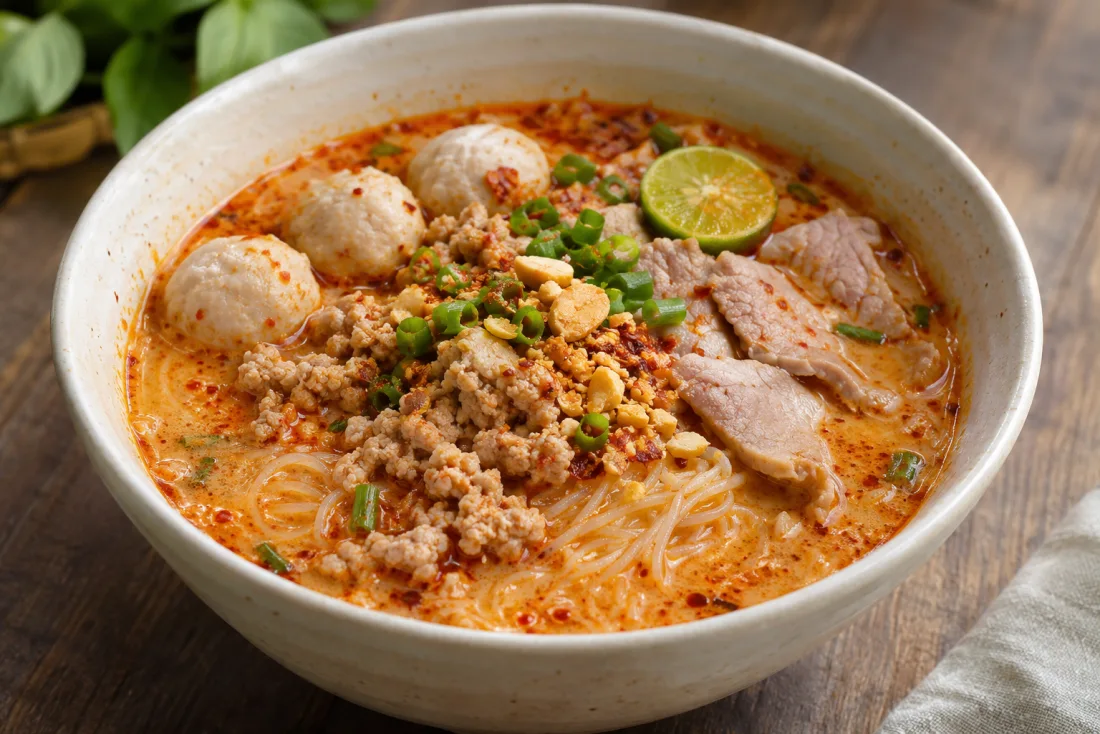

 cooked pork
What creamy and pork mean on the menu
Nam khon describes a thicker broth and moo means pork. The bowl can contain sliced pork, ground pork or pork balls. Creamy orange broth may use evaporated milk or another thickening ingredient. Color cannot establish the dairy content. Ask about the noodle type.
A creamy pork noodle order in Thailand
A Thai restaurant menu lists a creamy pork tom yum noodle dish with tender sliced pork, bouncy pork pieces and minced pork. Other shops may add pork balls or separate seasoning. This works as a single bowl and can be packed with broth apart from the noodles.
Rice noodles, pork, evaporated milk and peanuts
A typed Thai recipe uses pork, noodles, vegetables, ground peanuts, creamy tom yum sauce, stock and evaporated milk. Another pork tom yum recipe uses milk, roasted chili oil, lime, fish sauce and mushrooms. Herbs or coconut milk vary by kitchen.
Cook pork and noodles before combining
Cook sliced and ground pork and any meatballs through. Blanch noodles and greens separately and drain them. Use clean cooked-food utensils. Add hot broth and the finishing seasonings near serving. Citrus does not replace cooking.
Mellow dairy and bright lime heat
Evaporated milk rounds the tangy chili broth. Sliced pork is tender and ground pork carries the sauce. Peanuts add a roasted note and rice noodles take up broth quickly. A lime wedge or extra chili can change the finish.
Allergens in dairy, peanuts and seasonings
Evaporated milk and regular milk contain dairy. Peanuts are separate. Fish sauce contains fish, while some chili sauces contain shrimp or oyster. Soy, wheat or egg may occur in prepared sauces or meatballs. Ask about shared noodle water and equipment.
If you have a food allergy, tell the restaurant before ordering and ask about ingredients, sauces and shared cooking equipment.