
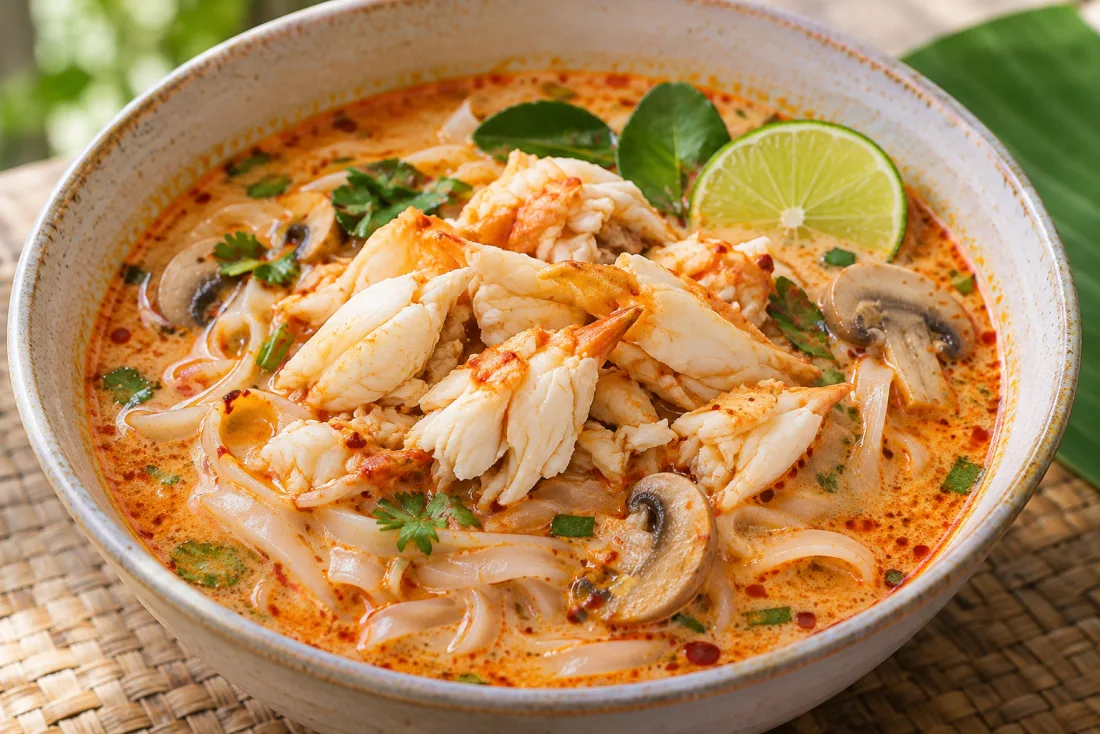

Nam khon identifies rich broth and pu means crab
The name signals tom yum noodles with crab and an opaque broth. Pu kon specifies lump crab. One serving can use picked meat and another can include a claw. Crab meat and imitation crab stick are different ingredients. The color of the bowl cannot tell you whether it uses dairy, coconut milk or another ingredient for body.
Crab tom yum and other Thai noodle shop versions
A Bangkok restaurant lists creamy lump crab tom yum noodles separately from its prawn noodles and crab egg noodles. A Thai noodle shop also lists lump-crab dishes including tom yum noodles. These menus show actual ways to serve crab without fixing the origin in a province. Ask whether the restaurant uses picked crab or shell-on pieces and whether it can adjust the heat. Other seafood additions vary by kitchen.
Rice noodles, crab and a lime-herb broth
Use cooked crab, rice noodles and a tom yum base. Lemongrass, galangal and makrut lime leaves can infuse the broth, while lime, chili and fish sauce set the sour, hot and savory balance. Mushrooms, scallions and roasted chili paste are possible additions. Some rich noodle broths use evaporated milk. Coconut milk or cream can also be used in rich tom yum. Ask the kitchen because a menu's creamy label does not identify which one.
Cook the broth and noodles and add the crab
Heat stock with aromatics and cook mushrooms if included. Cook raw crab thoroughly and separate its tools from cooked food. Heat cooked crab meat through while keeping the lumps intact. Cook and drain the rice noodles separately, then combine them with hot broth and crab. Lime can be added near service. If a claw is present, remove fragments of shell before mixing meat into the noodles.
Lime and chili with crab's gentle sweetness
The first spoonful tastes tart and hot. Crab gives a softer, sweeter bite, and mushrooms may hold the broth. Lemongrass and makrut leaf bring citrus aroma. A coconut version leaves coconut fragrance, whereas evaporated milk lends mild dairy richness. Rice noodle width changes how much broth each bite carries. Taste before adding sauce or more chili.
Allergens in crab, stock, milk and noodle options
Crab and shrimp are crustaceans. Fish sauce contains fish. Squid or clams are molluscs and oyster sauce may contain oyster. Evaporated milk adds dairy; coconut milk contains coconut. Ask about any peanuts, soy or wheat in chili paste and stock. Egg noodles commonly add egg and wheat. Ask about shared cookware and avoid assuming that removing visible crab eliminates it from the broth.
If you have a food allergy, tell the restaurant before ordering and ask about ingredients, sauces and shared cooking equipment.