

 shrimp
 squid
 fish
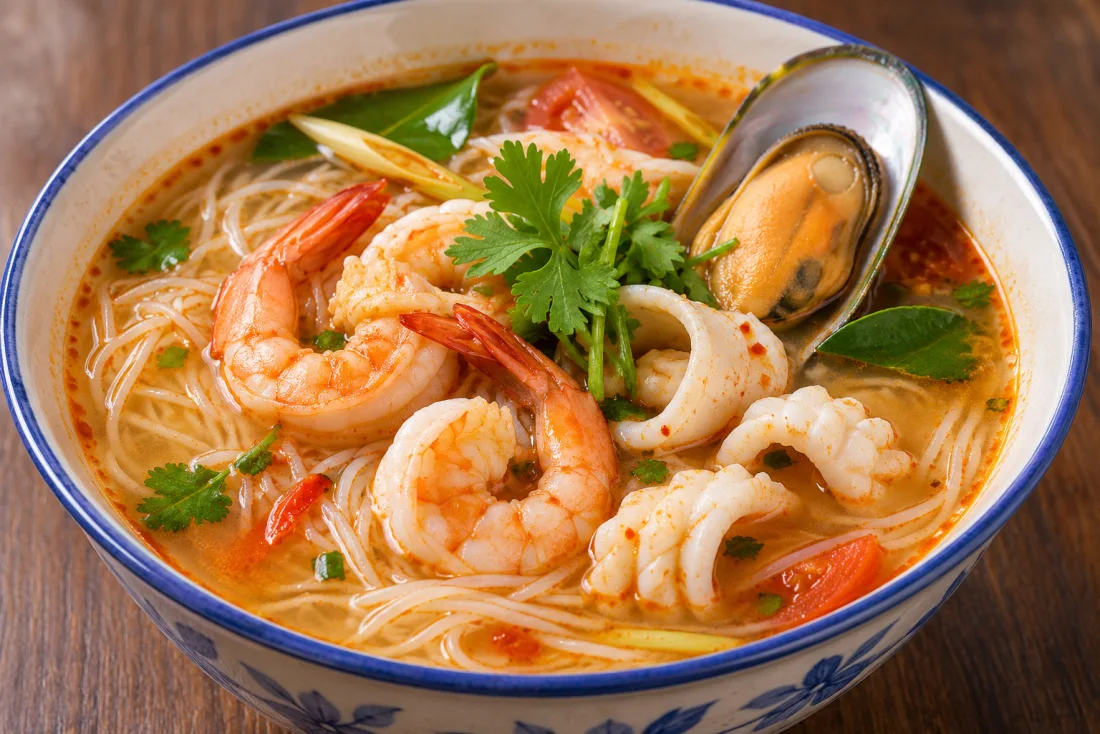
A seafood tom yum bowl with noodles
Kuay teow tom yum talay combines seafood, noodles and tom yum seasoning. A Samsen restaurant lists seafood tom yum and clear seafood noodles separately. An archived Thai broadcast also records a shop selling a clear and a richer version. These examples show how noodle shops serve it.
Noodles, seafood and three fragrant herbs
Rice noodles can be paired with shrimp, squid, fish or fish balls. The stock may come from shrimp shells or another shop stock. Lemongrass, galangal and makrut lime leaves supply aroma. Lime, fish sauce, fresh chilli and roasted chilli paste adjust the hot and sour balance.
Preparing stock, noodles and seafood
Cooks can blanch the noodles separately and then assemble the bowl with cooked seafood. Other versions cook the seafood briefly in the fragrant broth. Seasoning can be adjusted in a separate bowl before the hot broth is poured over the noodles.
Lime tang, chilli heat and seafood sweetness
Lime brings a bright sourness and chilli brings heat, followed by herbal fragrance and the savoury depth of fish sauce. Shrimp and fish add sweetness. Dairy or coconut milk can give the broth a rounder body. The finished spice level varies by shop.
Clear, creamy and noodle-shop tom yum styles
Nam sai means a clear broth and nam khon means a richer one. A rich broth might use fresh milk, evaporated milk or coconut milk. Some noodle-shop tom yum seasonings also use roasted peanuts. Look for a noodle description if you want a full bowl with noodles.
Allergens in stock, noodles and seasonings
Fish, fish sauce, shrimp and squid occur in reference versions. Some bowls add other shellfish or include shrimp in their stock or chilli paste. Rich broth can contain dairy or coconut. Egg noodles can contain wheat and egg, and peanuts may be added. Ask about the selected broth, toppings and shared utensils.
If you have a food allergy, tell the restaurant before ordering and ask about ingredients, sauces and shared cooking equipment.