
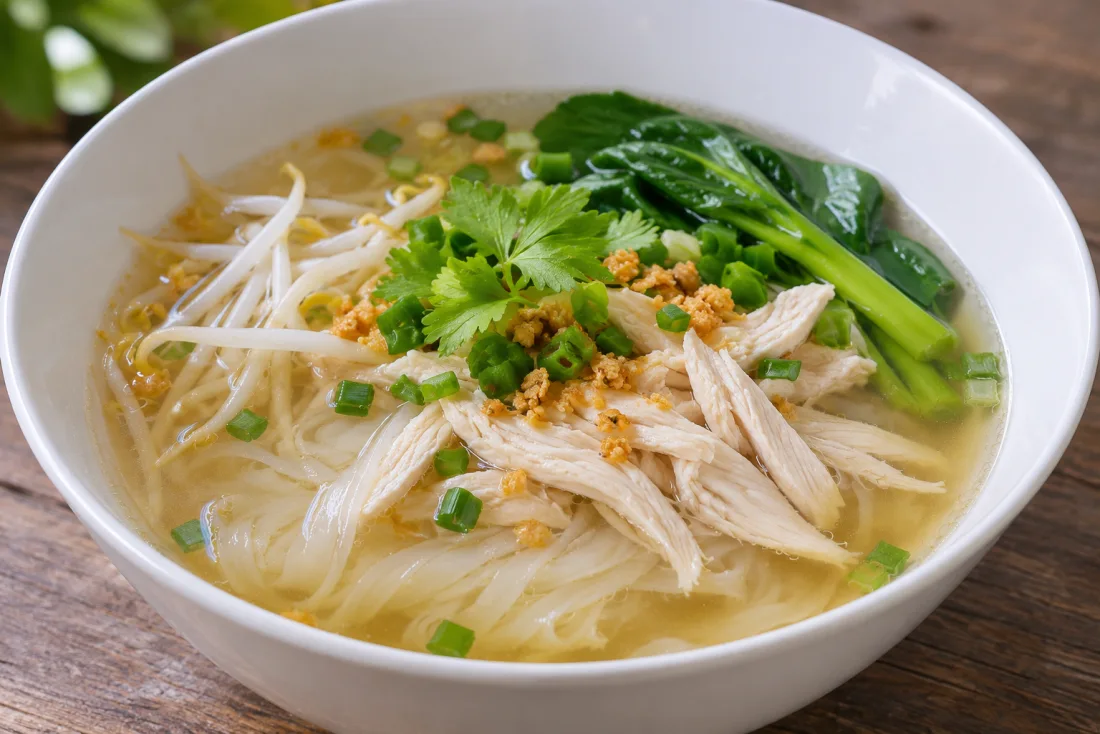

 cooked shredded chicken
Clear broth and shredded chicken
Nam sai means clear broth. Kai means chicken, and kai chik specifies it is shredded. The cooked meat can be torn into thin strands and set over rice noodles. Bean sprouts, scallions and fried garlic can accompany it.
From Thai home broth to noodle shops
A Thai home recipe cooks chicken breast and uses the cooking broth for noodles. Other cooks add soy, white pepper or optional meatballs. Thin, narrow or wide rice noodles may be available. Ask about the noodles and toppings at the shop.
Chicken, rice noodles and cilantro root
A Thai recipe uses chicken breast, rice noodles, cilantro root, bean sprouts, scallion, cilantro, salt and seasoning, with fried garlic at serving. Light soy and white pepper appear in another version. Chicken thigh or other greens change the texture.
Cook the chicken and blanch noodles separately
Cook chicken through; USDA poultry guidance uses 74°C. Shred it with clean utensils. Blanch the noodles and vegetables separately and drain them. Add hot broth and fresh herbs near serving. Keep raw chicken tools away from cooked food.
Light chicken flavor and fragrant garlic
The soup is savory and gentle. Chicken strands have a tender bite, while rice noodles are slippery and bean sprouts add crunch. Fried garlic gives a toasted note. Taste the broth before adding chili, vinegar or more salt.
Allergens in stock, noodles and toppings
Soy sauce can contain soy and wheat. Mixed seasonings can include fish, crustaceans or mollusks. Egg noodles contain wheat and often egg. Ask about the chosen noodles, seasoning and shared cooking water or tools.
If you have a food allergy, tell the restaurant before ordering and ask about ingredients, sauces and shared cooking equipment.