
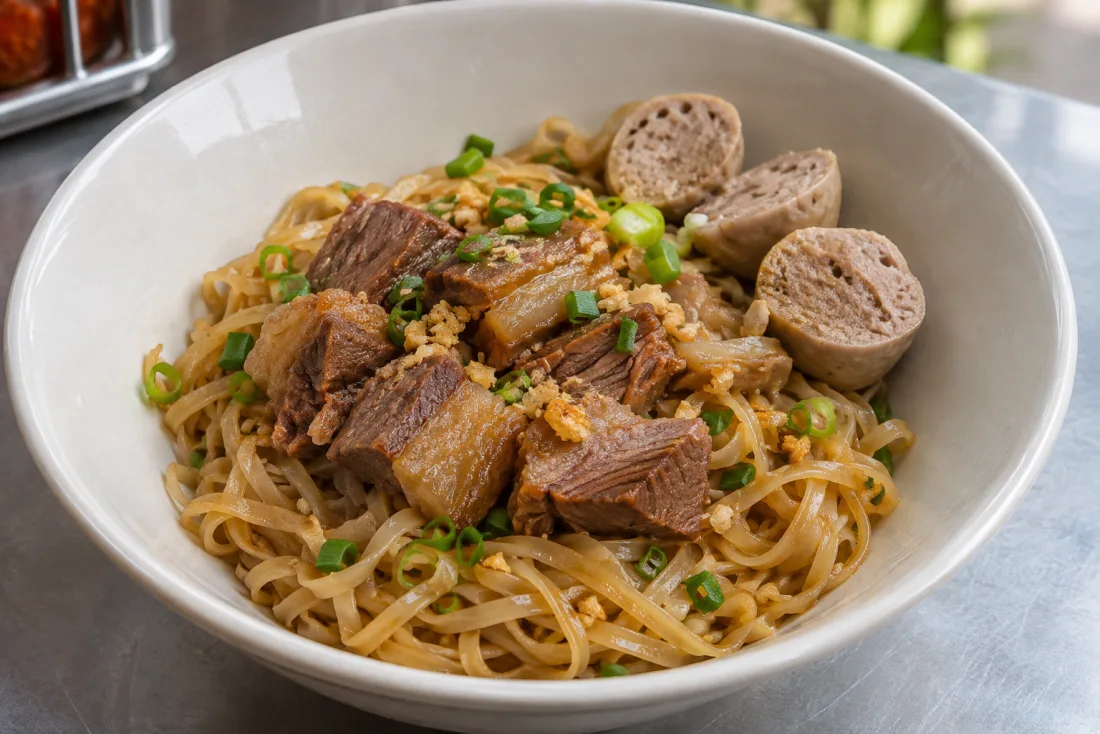

 braised beef
Dry refers to how the noodles are served
Kuay tiew refers to a noodle dish and haeng means dry-style service. The noodles are cooked, then tossed with seasoning rather than filled with broth. A restaurant can offer a separate cup of soup. The broad name does not specify meat. This article describes the beef example, which menus may mark neua or neua tun. Check the protein and whether the seasoning is already in the bowl.
Dry and soup versions in Thai noodle shops
One Thai menu lists braised beef and beef balls both in soup and dry. Another offers mixed seasonings with choices of cuts and a cup of stock. Such menus show how diners can choose the format and cut without establishing a single province of origin. Liver, tendon and other offal may be options and need not appear in a serving. Ask separately about the broth or cookware when ingredients matter.
Rice noodles, beef and seasoning choices
Narrow flat rice noodles hold seasoning and thin vermicelli gives a finer texture. Braised brisket, cooked beef slices and beef balls can go with the noodles. Bean sprouts, scallions and fried garlic are possible garnishes. A shop may use sweet soy or fresh chilli, while one menu explicitly mentions ground roasted peanuts. The broth can be served separately. Check which additions go with the noodles you order.
Drain and toss the noodles before plating
Cook the noodles and vegetables, then drain well. Toss in a small amount of seasoning and fried garlic oil if used. Fold flat noodles carefully to keep them from breaking. Heat cooked beef and meatballs appropriately and fully cook any raw meat. Put any soup in its own cup so the noodle bowl remains dry-style. Check for shared utensils if choosing between wheat noodles and rice noodles.
Concentrated sauce with tender beef or springy balls
With less liquid, savoury sauce and toasted garlic can be distinct. Sweet soy can add mild sweetness, tender beef feels different from springy meatballs and sprouts give crunch. Crushed peanuts add another aroma where used. The separate stock can soften the experience without wetting the whole bowl. Ask about chilli and add vinegar or flakes separately if offered.
Allergens in noodles, meatballs, sauces and stock
Soy sauce contains soy and may contain wheat. Fish sauce contains fish and oyster sauce may contain oyster. Wheat or egg noodles and prepared meatballs can introduce wheat, egg or soy. One dry beef version lists peanuts. Check fried garlic oil and any sesame, dipping sauces and separate stock. Shared blanching water or utensils can contribute cross-contact.
If you have a food allergy, tell the restaurant before ordering and ask about ingredients, sauces and shared cooking equipment.