
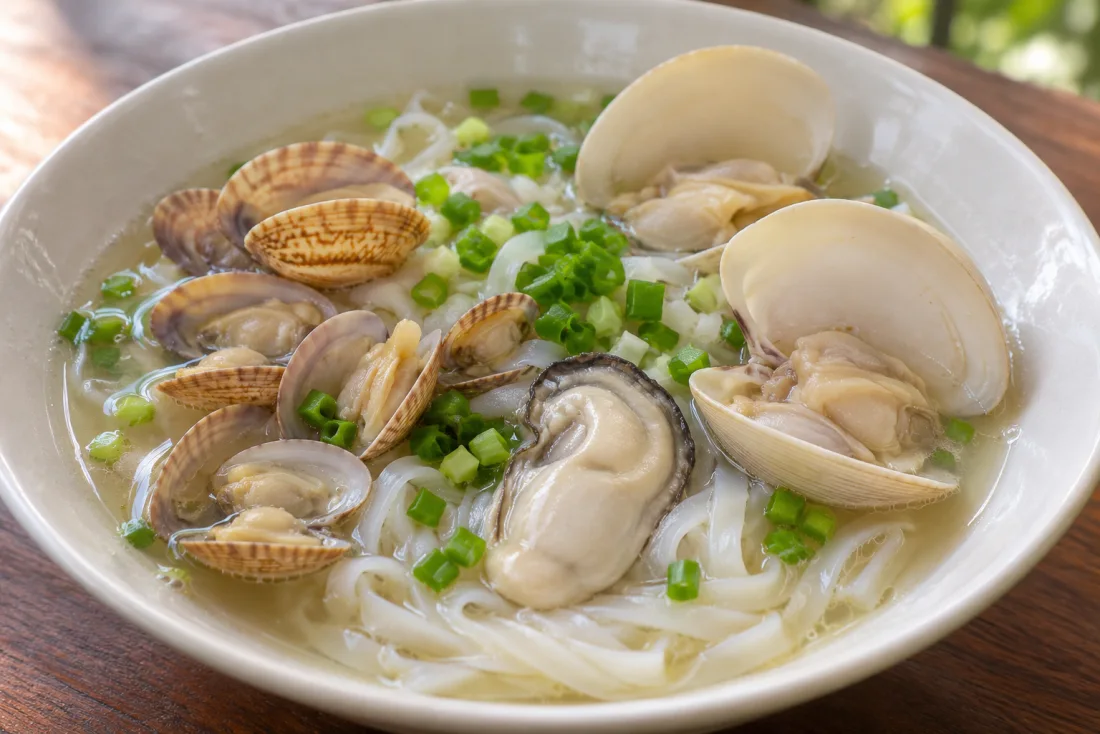

Identify the shells and the noodles
Striped clams and larger hard-shell clams may arrive in opened shells. Oysters can be served out of the shell. Thin flat rice noodles and round rice vermicelli are two visibly different choices.
A Thai shop’s three-shellfish bowl
A Thai vendor lists oysters, striped clams and hard-shell clams with options for thin rice noodles or glass noodles. That combination represents one real menu. The word hoi is broad and can also form part of a shop name.
Build the bowl from separately cooked parts
Cooked shellfish and blanched noodles can be served in light broth. Narrow flat rice noodles carry more broth on their surface. Rice vermicelli is finer, while glass noodles can have a different starch base. Ask about stock ingredients.
Brine, mild broth and tender shellfish
Clams have a firm bite and oysters tend to be softer. The broth holds their natural savoury flavours. Chilli or sour table seasonings may be offered separately. Taste the broth before adding them.
Choosing shellfish and stock
Ask which molluscs are available, whether the soup is clear and which noodles the shop offers. Remove the shells as you eat. Delivery may allow the stock and noodles to be packed separately.
Mollusc allergens and the other stock ingredients
Clams and oysters are molluscs. Shrimp and crabs are crustaceans and may be used separately in the broth. Fish sauce contains fish, and prepared seasonings may contain soy or wheat. Ask about shared strainers and ladles.
If you have a food allergy, tell the restaurant before ordering and ask about ingredients, sauces and shared cooking equipment.