
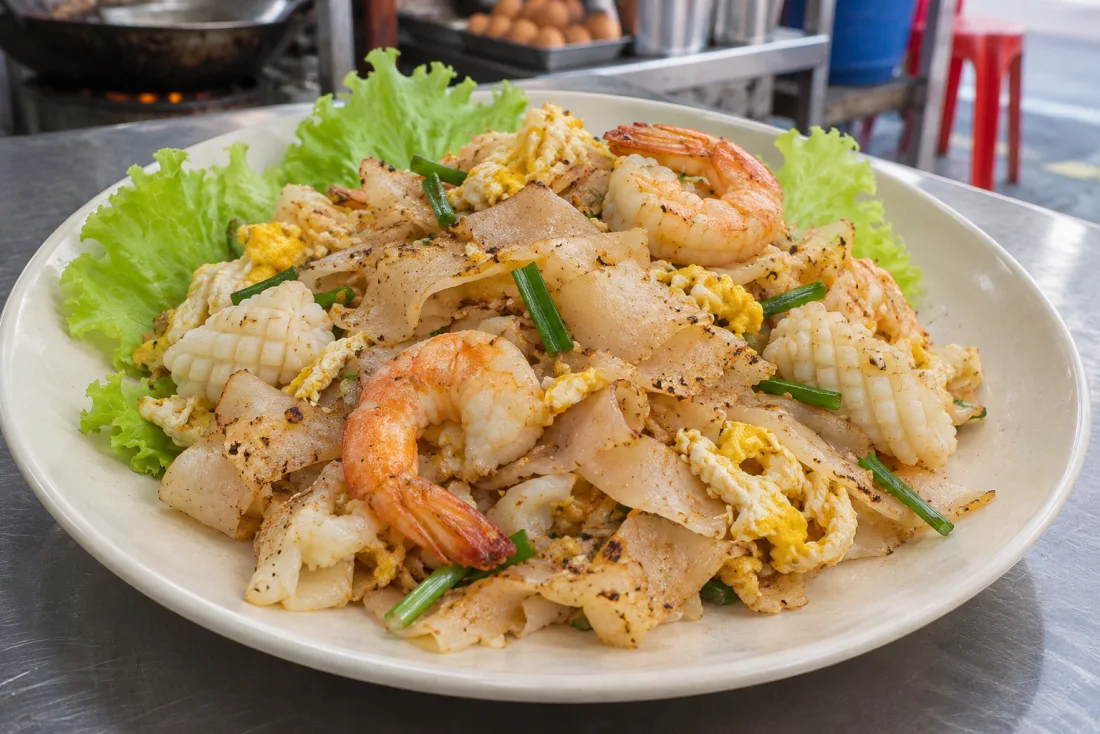

 shrimp
 squid
What kua means on the menu
The noodle name is followed by a word for searing or tossing in a hot pan. Talay identifies the seafood version. Some shops also do chicken. This version is made to order and can serve as a meal, with wok fragrance most pronounced just after cooking.
Broad noodles, eggs and seafood
Wide rice sheets take on a tender chew and spots of colour. Cooked shrimp bring sweetness, and squid adds springiness. Some merchants use fresh squid and crisp-style squid together. Lettuce on the plate offers a cool crunch.
The savoury sear
Noodles lose moisture where they meet the hot pan, forming browned edges. Egg and seasoning sit right on the rice sheets. Light soy, other seasonings and pepper vary. Chilli sauce may come on the side. The finished plate can be glossy but usually has very little loose sauce.
Tender noodles or a crisp egg layer
A quick toss leaves loose, soft folds. Some restaurants let broad sheets rest in the pan and brown against a thin, fully cooked egg layer. Shrimp and squid can be mixed into the soft noodles or laid among the browned pieces. Crisp edges soften in a covered takeaway box.
How to recognise and choose it
Unlike seafood rad na, the plate has no pool of thick gravy. Searing carries much of the flavour. Ask for a crisper version when offered, or choose soft noodles. Taste them before adding a chilli sauce or vinegar, and ask which seafood the restaurant uses.
Allergens, sauces and the shared wok
Shrimp is a crustacean, squid a mollusc, and the egg contains egg. Sauces can bring soy, wheat, fish or oyster. Rice sheets can meet wheat noodles or other ingredients on shared equipment. Removing toppings from a cooked batch cannot reverse contact.
If you have a food allergy, tell the restaurant before ordering and ask about ingredients, sauces and shared cooking equipment.