
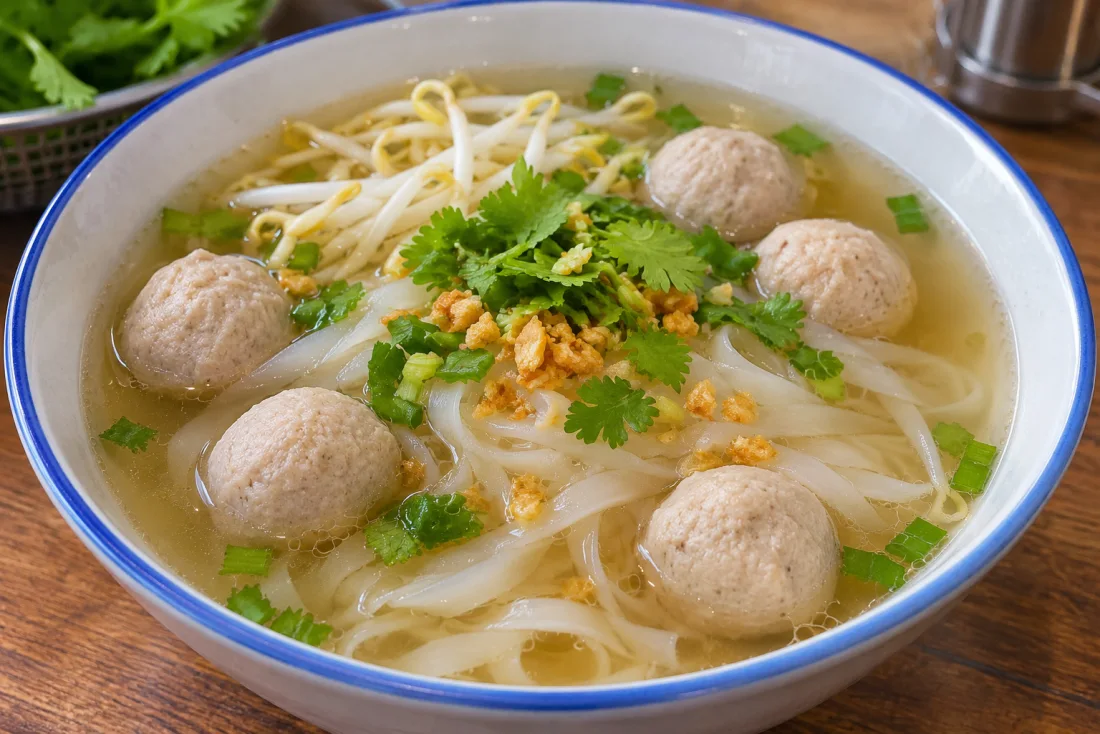

 pork meatballs
What clear broth and balls identify
The name describes the broth and the shaped filling. A title that does not specify fish, pork or beef does not identify the meat. This version uses pork balls with a clear noodle broth.
Preparing the broth, balls and noodles
One Thai noodle shop cooks pork balls in broth and blanches rice noodles and beansprouts separately. Toss the noodles with garlic oil, add the balls and broth and garnish with scallion, coriander and black pepper.
Springy balls, clear broth and garlic fragrance
Pork balls can have a springy bite. The broth is mild and savory and can look pale yellow or brown. Noodles are soft and sprouts crisp. Taste before adding chili, vinegar or fish sauce.
Picking noodle width and serving
Choose thin or wide rice noodles when available. For takeaway, ask for separate stock and noodles to keep the texture. Cut large balls before serving to young diners.
Fish ball noodles, boat noodles and pork ball clear soup
Fish ball soup uses a different filling and can use another stock. Boat noodles can use darker seasoned broth and some recipes contain blood. Tom yum versions can contain chili, lime and peanuts even if they look clear.
Allergens in broth, balls and shared noodle water
Check pork ball and broth ingredients for soy, wheat, egg, fish or other seasonings. Fish balls contain fish, and oyster or shrimp seasonings add their respective allergens. Ask about shared pots, baskets and noodle water. Removing balls cannot clear the soup of allergens.
If you have a food allergy, tell the restaurant before ordering and ask about ingredients, sauces and shared cooking equipment.