

 pork
A filled sheet rather than loose noodles
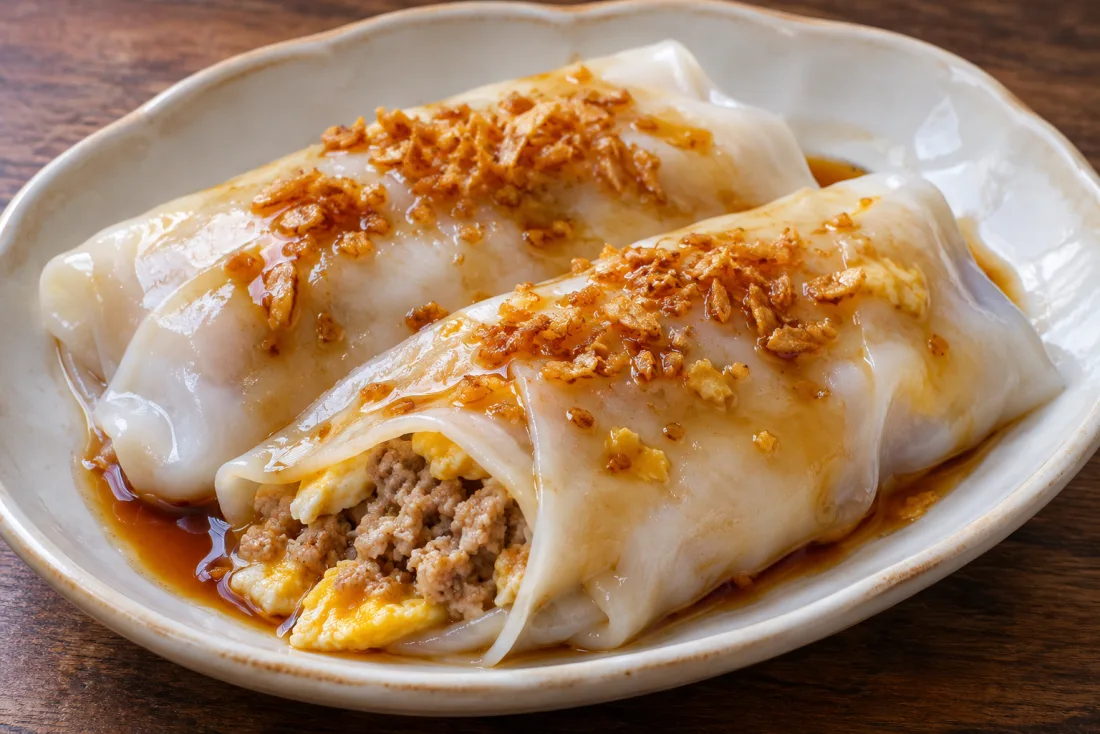
Kuai tiao refers to the rice noodle sheet, and sai khai means an egg filling. The older recipe starts with a wide uncut sheet and wraps pork mixed with duck egg. Serve it whole or cut to show the center.
A Thai cookbook rice roll
A historical Thai cookbook records a fresh rice sheet filled with pork, egg and herbs. Divide larger rolls for sharing. Other white rice rolls use different fillings, so ask which meat and egg a kitchen uses.
Rice sheets, pork, duck egg and soy
The original lists an uncut rice sheet, pork, duck eggs, salt, pepper, scallion, cilantro, salty soy sauce, fresh chili and fried garlic. Egg binds the filling. The restaurant can serve soy and chili on the side.
Heat the filling all the way through
Cut manageable pieces of rice sheet and fill them evenly. Cook the pork and egg center through; USDA guidance for ground pork uses 71°C. Use separate raw and cooked tools. Cut and dress the rolls near serving.
Silky wrapper and crisp garlic
The wrapper is soft and smooth, and the pork center is savory with herb and pepper notes. Fried garlic adds crunch. Soy gives saltiness and chili adds heat. Try a little sauce first if it is strong.
Allergens in egg, soy and noodle sheets
Duck egg is an egg allergen. Soy sauce can contain soy and wheat, and a restaurant may use a blended wrapper. Ask about fish sauce, oyster, shrimp and shared fryers or utensils. The original filling contains pork.
If you have a food allergy, tell the restaurant before ordering and ask about ingredients, sauces and shared cooking equipment.