
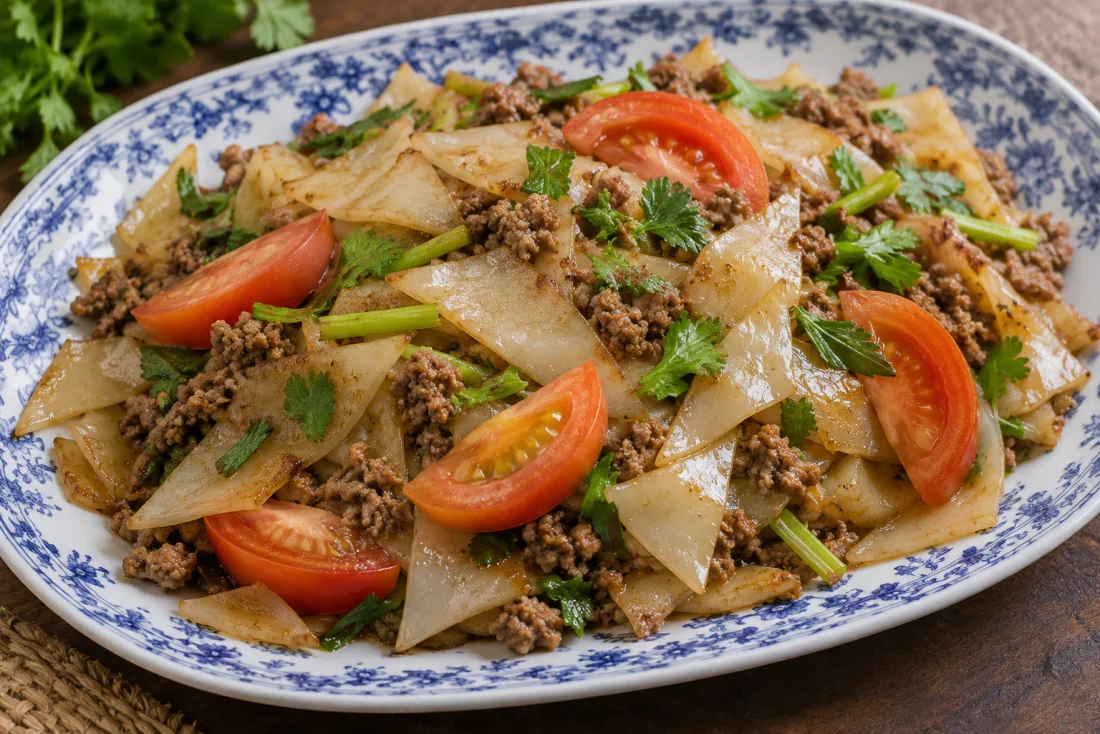

 minced beef or chicken
A specific recipe behind a general name
The Thai name means stir-fried noodles. This old preparation defines its own shape and seasoning: diamonds of soft rice noodle, minced meat, celery and a little soy sauce.
Noodles, meat and celery
Cut fresh noodle sheets into wide four-sided pieces. Minced beef or chicken is mixed with chopped Chinese celery and seasoned with soy and pepper. Tomato is in the recipe’s ingredient list.
A quick wok finish
A hot pan and a little lard let surface water cook off the noodles. Break up the mince, cook it through and toss it between the wide slippery pieces. A light soy seasoning leaves the soft folds visible.
Taste and texture
There is a mild savoury glaze, a fragrant celery note and a gently peppery finish. Beef makes the plate more robust, while the chicken version can let the rice and celery stand out.
Two ways to plate it
A larger platter spreads out the noodle pieces with tomato and mince. A smaller lunch plate can arrange tomato at the edge and serve optional table seasoning separately. Eat soon after frying.
Allergens and dietary needs
Soy sauce contains soy and may include wheat. The recipe also uses celery and traditionally lard. Ask about noodle ingredients, added fish or oyster sauce, and shared wok surfaces when allergies matter.
If you have a food allergy, tell the restaurant before ordering and ask about ingredients, sauces and shared cooking equipment.