
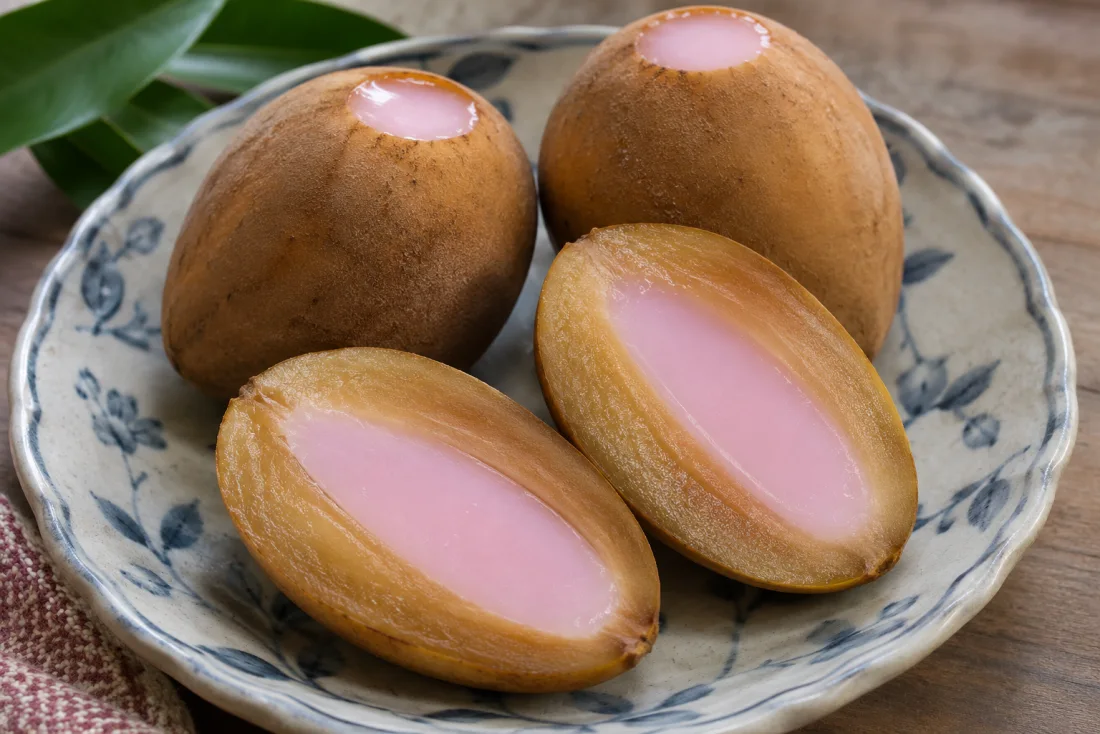

Sapodilla and its colorful filling
Lamut means sapodilla and sai denotes filling. The brown fruit has hard seeds that are removed. A hollow fruit can keep its base intact and hold the pink agar. Cut pieces display two different textures and colors.
A shaped fruit dessert in Thai cookery
An old Bangkok cookbook describes opening the fruit at its stem and removing the seeds before filling it. Whole fruit can be cut for sharing or served in halves. The recipe documents the appearance without establishing a single origin.
Sapodilla, agar, sugar and vanilla
The recipe lists sapodilla, prepared agar jelly, white sugar, red food coloring and vanilla flavor. The color gives the center a pink hue. The old ingredients do not specify berries or dairy. Ask about a shop’s jelly or flavoring products.
Remove every seed and let the filling set
Wash the fruit before hollowing and remove all hard seeds. Melt and season the agar, fill the upright fruit and allow it to set. Slice with clean equipment and follow proper storage for cut fruit. Handle warm agar safely.
Soft brown fruit and firm vanilla jelly
Ripe sapodilla is soft and sweet, sometimes with a grainy texture and brown sugar notes. Agar gives a firmer clean bite. Vanilla adds a gentle fragrance. A slice carries both fruit and jelly.
Allergens and prepared ingredients
The historical recipe does not list milk, egg, wheat, soy or nuts. Check any prepared jelly mix, vanilla flavor and coloring along with shared knives and bowls. Ask about the fruit or a substitute gelling agent if relevant.
If you have a food allergy, tell the restaurant before ordering and ask about ingredients, sauces and shared cooking equipment.