

 ground pork
 fish sauce
What khua says about the dish
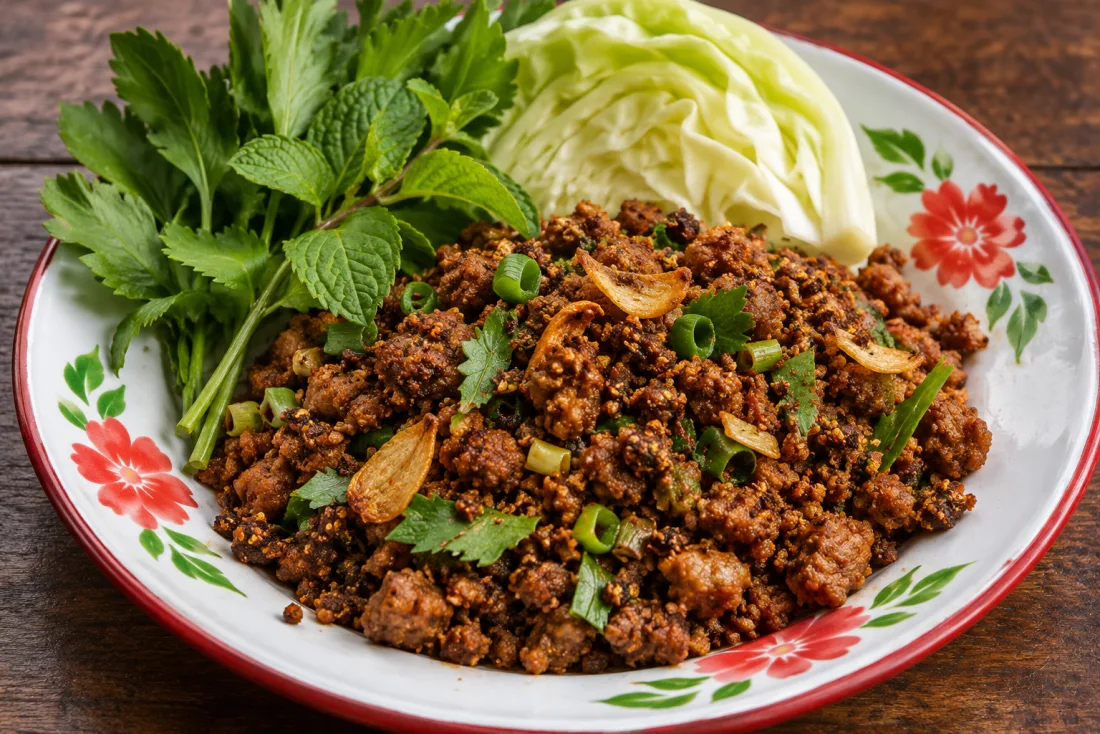
Larb khua is larb heated and cooked in a pan. Larb moo khua specifies the pork version. The plate is usually dark, crumbly and lightly moist. The Lanna version builds its character around roasted spices. Lime and toasted rice dominate some Isan larb, a different flavor profile.
A Lanna dish for shared meals
Chiang Mai University documents larb as a group of Northern dishes. A Thai studio recipe mixes cooked pig skin, liver and intestines into minced pork and cooks it through. Restaurant and home versions vary. Sticky rice and green vegetables can accompany the cooked dish. Ask for the fully cooked version when ordering.
Pork and a roasted spice blend
One Thai recipe uses pork, cooked offal, broth, fish sauce, dried chilies, coriander seed, black and long pepper, makhwaen and other spices. Its blend also includes cinnamon, cloves, galangal, lemongrass and roasted garlic. Cooks may finish with mint, scallion and other herbs or sprinkle crisp garlic.
Pan-cook the mince thoroughly
Toast and grind the spices or use a prepared blend, then cook the seasoned mince through. Ground meat should reach the appropriate internal temperature; USDA guidance for ground beef and pork uses 71°C. Handle any offal according to its own requirements. Keep raw equipment away and add fresh herbs at the end.
Roasted spice and warm heat
Minced pork feels crumbly and fragrant. Dried chilies and pepper provide warmth. Makhwaen can give a citrussy tingle. Herbs lift the dish and fried garlic can add crunch. Sticky rice and vegetables offer milder bites between the spices.
Allergens in prepared spices and seasonings
Fish sauce contains fish. Spice or sauce mixes can include soy, wheat or crustaceans. Oyster is a mollusk. Ask about broth, frying oil and shared mortars or pans. If avoiding pork or offal, confirm the exact meat and stock.
If you have a food allergy, tell the restaurant before ordering and ask about ingredients, sauces and shared cooking equipment.