
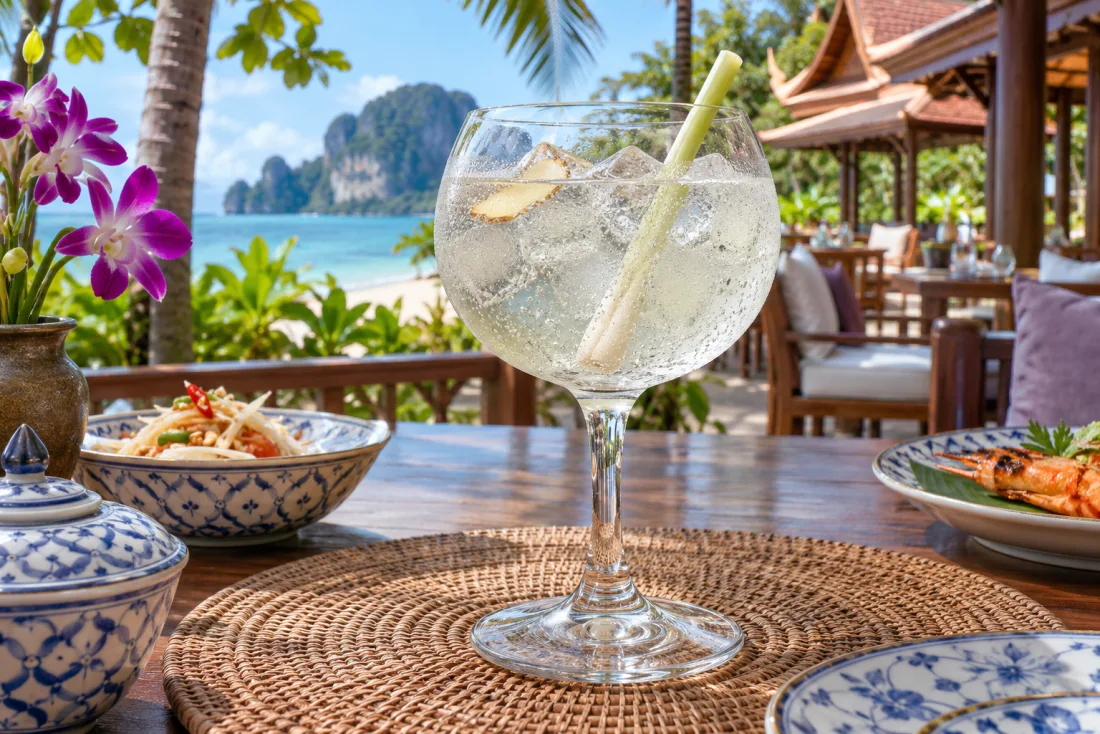

Naming the drink
Gin, tonic and lemongrass identify the drink. One Koh Samui hotel lists gin, lemongrass, ginger and elderflower tonic. A Bangkok bar also uses galangal, makrut lime and coriander root. These are local variants, not a single fixed regional recipe.
Juniper, lemongrass and tonic
Gin supplies juniper and other botanicals. Bruised lemongrass or an infusion gives a citrus-like aroma. Carbonated tonic supplies bitterness and bubbles. Ginger and galangal give different root notes, and elderflower tonic adds a floral character.
Cold bubbles and a bitter finish
The first sip is crisp and fizzy. Lemongrass and gin emerge, followed by tonic bitterness. Elderflower can make the aroma feel sweeter. Herbal tint and garnish cannot tell you whether lime juice is present or how strong the drink is.
Serving with ice
A round gin goblet puts ginger and lemongrass close to the nose, while a highball shows the bubbles clearly. Stir gently to preserve fizz. Glass volume includes ice and tonic and does not give the spirit measure.
Related lemongrass cocktails
Mojito uses rum, mint and soda. A sour may use gin, citrus juice and lemongrass with a different texture. Gin and tonic keeps tonic as its distinctive mixer. Changing to soda or an alcohol-free base changes the recipe.
Allergens and alcohol
The reference contains gin. The simple version needs no egg or dairy. Prepared condiments, including a chilli paste used by some bars, have their own ingredient lists and can contain fish, shellfish or other allergens. Ask about shared tools and the exact alcohol-free recipe if needed.
If you have a food allergy, tell the restaurant before ordering and ask about ingredients, sauces and shared cooking equipment.