
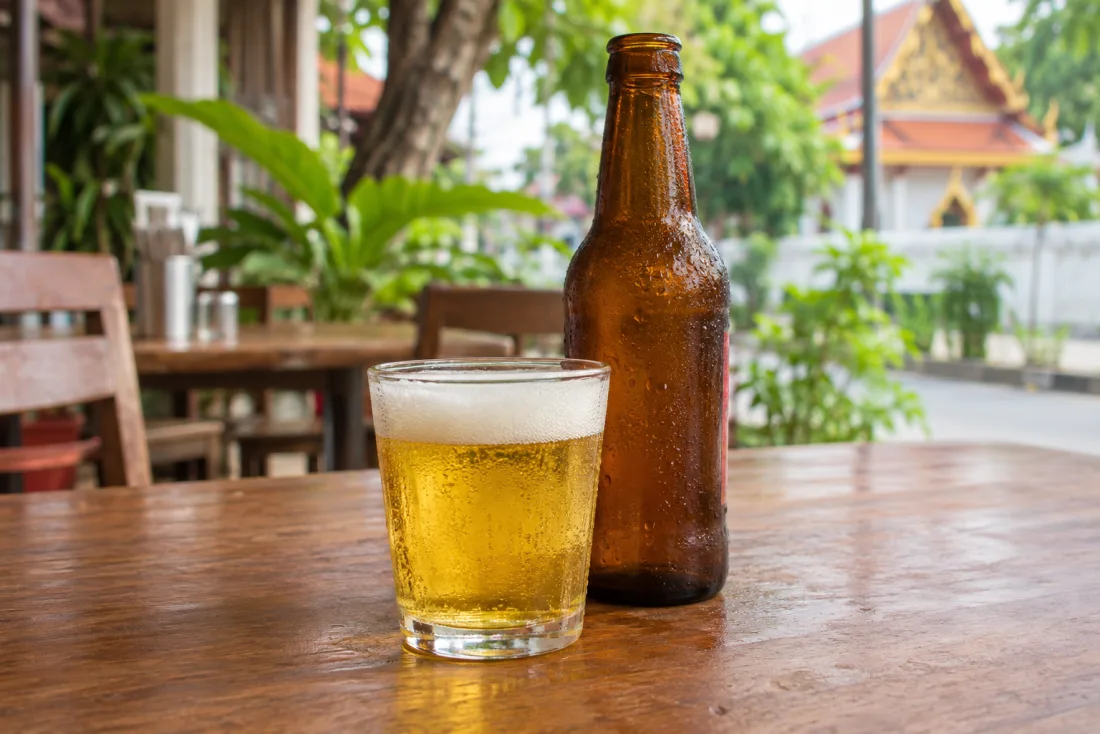

The small glass bottle
Boon Rawd lists a 320 mL bottle in Thailand, and a Thai wholesaler identifies the exact format. A small bottle in another market, such as a Japanese 330 mL import, can have a different capacity.
Understanding the brewing ingredients
An American distributor describes brewing water, barley, Thai rice and hops. The Japanese export specification lists malt, rice, hops and sugars. These describe documented export products; the exact Thai bottle label governs local ingredients and quantities are not disclosed.
Colour, bubbles and malt aroma
The lager is clear gold with white foam, mild grain aroma and a light bitterness at the end. Serving temperature and glass cleanliness change how easily the aroma and head can be noticed.
Serving the small bottle
The net volume is the liquid packed in the sealed bottle. Pour against the side of a clean glass to control foam. Ice dilutes the drink as it melts. An unopened bottle and its label help distinguish a small glass bottle from a can.
Capacity and alcohol content
The brewer’s standard Leo profile gives 5% alcohol by volume. Check the particular bottle because formats and market labels vary. The lager can be served with grilled or fried dishes, with capacity and alcohol content shown separately.
Allergens and gluten
Barley malt contains gluten and a rice component does not make conventional beer gluten-free. Check the bottle if avoiding barley or gluten. Shared glassware or mixing tools can also contact other ingredients.
If you have a food allergy, tell the restaurant before ordering and ask about ingredients, sauces and shared cooking equipment.