
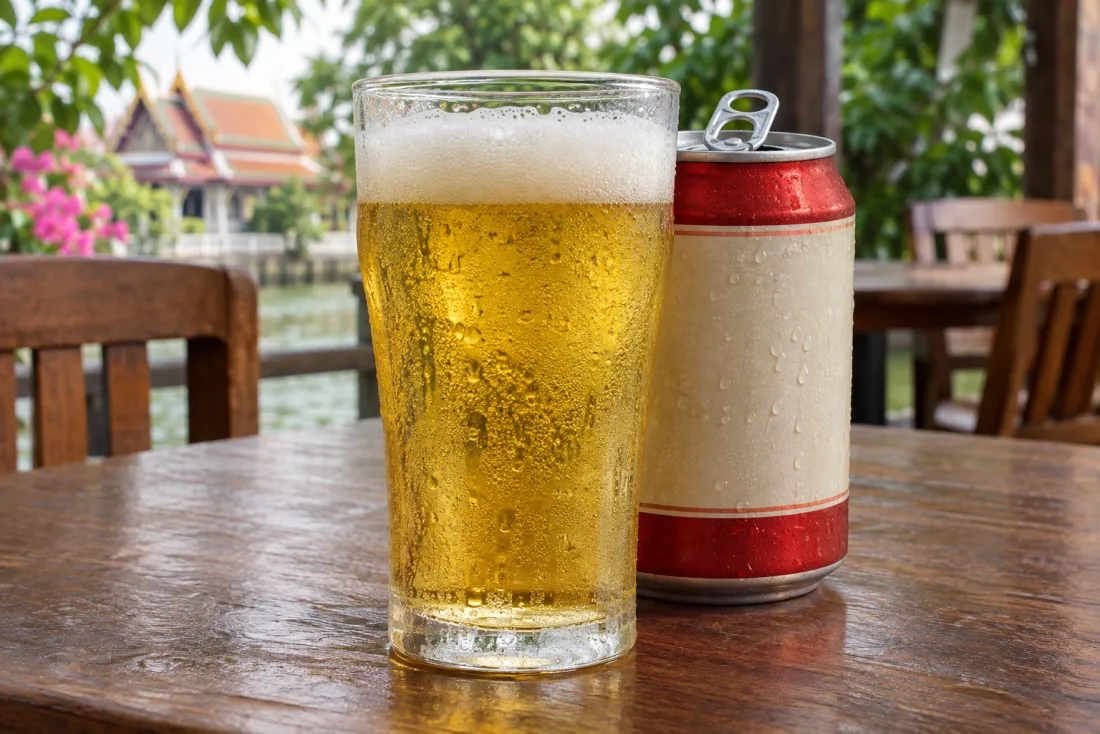

The Thai 320 mL can
A Thai wholesaler and the national carbon-label register identify a 320 mL can. Other regions sell different formats, including a 330 mL Japanese export. Can and bottle capacity should be written separately on a menu.
What ingredient records describe
The Japanese export label lists malt, hops, rice and sugars. A US importer describes water, barley, rice and hops. These are representative brewing ingredients in documented export products. For the Thai can’s precise declaration, consult its label.
Colour, foam and flavour
The can does not show the drink colour until you pour. The lager looks golden with a white head, mild grain aroma and a short, gently bitter finish. Temperature and glass preparation affect aroma and foam.
Opening and serving the can
Keep it sealed until service, wipe the drinking area if needed and pour into a clean glass when desired. Net capacity means the amount inside the sealed container. Ice and serving cups do not change that declaration.
Alcohol content and capacity
The brewer says standard Leo is 5% ABV. Read the actual can for its alcohol content and capacity, since other formats and variants exist. The mild malt taste can be tried with grilled or fried dishes.
Allergens and grain gluten
Barley malt contains gluten. Rice and can packaging do not change that ingredient. Check the actual label if you avoid barley or gluten, and ask about glassware shared with drinks containing other allergens.
If you have a food allergy, tell the restaurant before ordering and ask about ingredients, sauces and shared cooking equipment.