

The historical Thai product category
A Thai register lists licorice-and-mint infusion bags. Ministry notice 471 took effect on 20 August 2026 and removed licorice from the list of permitted plant-tea ingredients. The Thai FDA describes a sales transition of up to one year for previously authorised products and a route to request a category change.
Root, mint and plant names
Licorice or liquorice refers to a flavour associated here with dried root. Thai names can refer to different plants, so use a full ingredient name. Mint adds a cool leaf aroma. Candies or flavoured drinks can use a different flavouring.
Lingering sweetness and colour
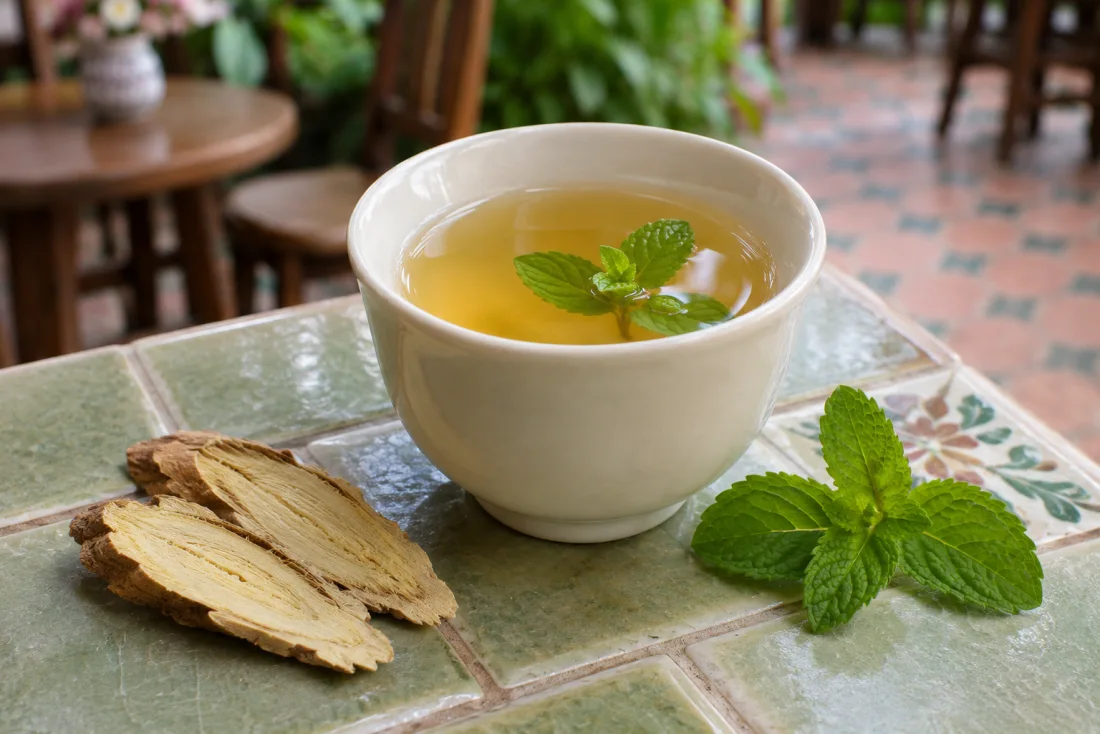
Glycyrrhizin gives the root its lingering sweetness. A cup can be pale gold or amber. Mint can contrast with the root and the colour does not establish how much licorice is present. Sweetness from a plant does not by itself indicate safety.
Historical hot serving
Previously sold infusion bags used hot water and could be served in a glass or porcelain cup. Root slices and mint are ingredient cues. An illustration of the historic serve does not establish the present legal status or ingredients of a product.
Similar herbal infusions and sweets
Mint alone has a cool leaf character. Thai lemongrass and pandan blends smell different. Sweets and soft drinks can use extracts or flavourings. Check the actual ingredients and whether a tea blend includes caffeine-containing tea leaves.
Allergens and licorice-specific safety
The old plain blend needs no dairy, egg or nuts. Thai FDA identifies effects of glycyrrhizin on kidney function, blood pressure and potassium. If affected by health conditions or medicines, check with a qualified professional. Read the label for the plant ingredients and ask about other allergens or shared tools.
If you have a food allergy, tell the restaurant before ordering and ask about ingredients, sauces and shared cooking equipment.