
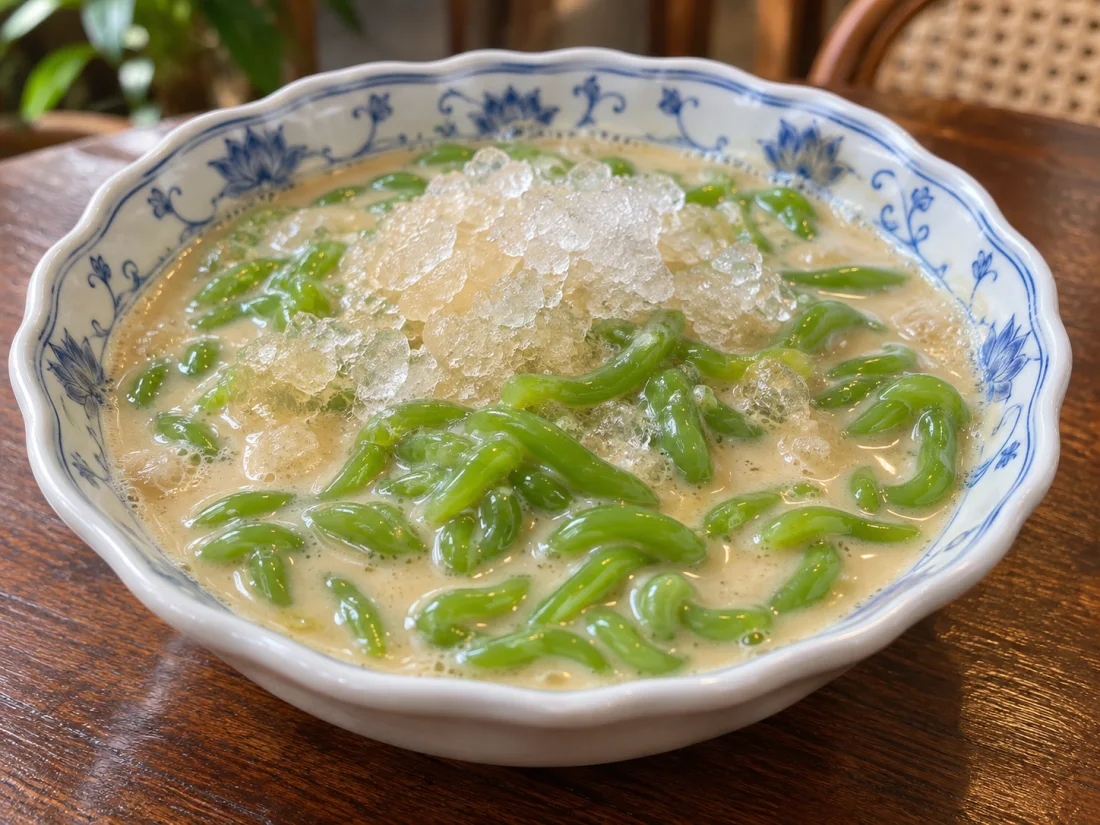

What Thai lod chong is and where you may find it
Lod chong refers to passing through holes, a description of how the strands take shape. Dessert shops serve the short strands in sweet coconut milk, often over ice. They are shorter and thicker than many rice noodles and can be lifted in a spoonful with the coconut milk. The liquid can be white or light brown depending on the sugar.
Thailand’s Rice Department publishes a recipe. A local learning archive in Yasothon documents a maker known for smaller strands. The examples show how the dessert is made in different settings and leave its first province open.
What rice flour, pandan and coconut milk contribute
Thai strands commonly start with regular rice flour. Some shops add tapioca or other starches to adjust texture and translucency. The Yasothon example uses rice flour and tapioca starch. Fresh pandan juice gives the strands a green colour and gently grassy fragrance. Recipes may also use clear food-grade limewater to help the strands hold their shape. Limewater here refers to a cooking solution rather than citrus juice.
The coconut milk is usually sweetened with palm sugar or a local block sugar and a little salt. The Rice Department version also includes granulated sugar and uses jasmine-scented water for the coconut milk. Cooking the strands and milk separately keeps their flavours distinct.
How warm batter becomes short strands in cold water
The cook mixes flour, pandan juice and clear limewater, then heats and stirs the mixture until it thickens evenly. It should cling to a paddle while staying loose enough to pass through a hole. Some cooks strain the mix first to remove small lumps.
The thick batter is pushed through a perforated mould into cold water, where each piece takes shape. The Rice Department recipe uses a second cold-water soak. Cooks drain the strands and can keep them separate from the coconut milk until serving. Hole size, pressure and cooling all affect the thickness and length.
Flavour, texture and serving with ice
A spoonful starts with cold coconut milk and sugar, then the soft pandan aroma comes through. The outside of each strand is slippery and the centre has a little chew. It keeps its shape in the milk and yields easily under the teeth. A pinch of salt leaves a faint savoury note behind the coconut.
Dark palm sugar can contribute a caramel-like aroma. Freshly added ice leaves the coconut milk rich at first, then lowers both sweetness and richness as it melts. If the strands and milk come separately, try adjusting the amount of coconut milk to taste.
Thai lod chong and the Singapore-style name
Thai menus can list lod chong Thai and lod chong Singapore. Both names can refer to green strands and coconut milk. The Department of Science Service describes rice flour as the usual base for Thai strands, with tapioca or other starches mixed in. Singapore-style versions commonly rely more on tapioca starch, making the strands clearer and chewier. The exact recipe is a matter for the shop.
This entry describes the short, rice-based Thai version. Sizes vary even within that category, as the Yasothon example shows. Ask how the shop serves it if you want to know about ice or any extra toppings.
Allergens to ask about: coconut, milk and flour blends
Lod chong usually comes with coconut milk and may include coconut flesh. Ask about both if coconut is an allergen for you. A classic sauce can use coconut milk, sugar and salt. Versions with only rice and tapioca flour in the strands can be made without dairy milk or wheat. Ask about prepared mixes, condensed milk or creamer if you need to avoid particular ingredients.
The shop can tell you what is in the strands, sauce and toppings. If cross-contact matters, ask about shared ladles, tubs, cooling water and ice scoops. The green colour and coconut name reveal little about other ingredients.
If you have a food allergy, tell the restaurant before ordering and ask about ingredients, sauces and shared cooking equipment.