
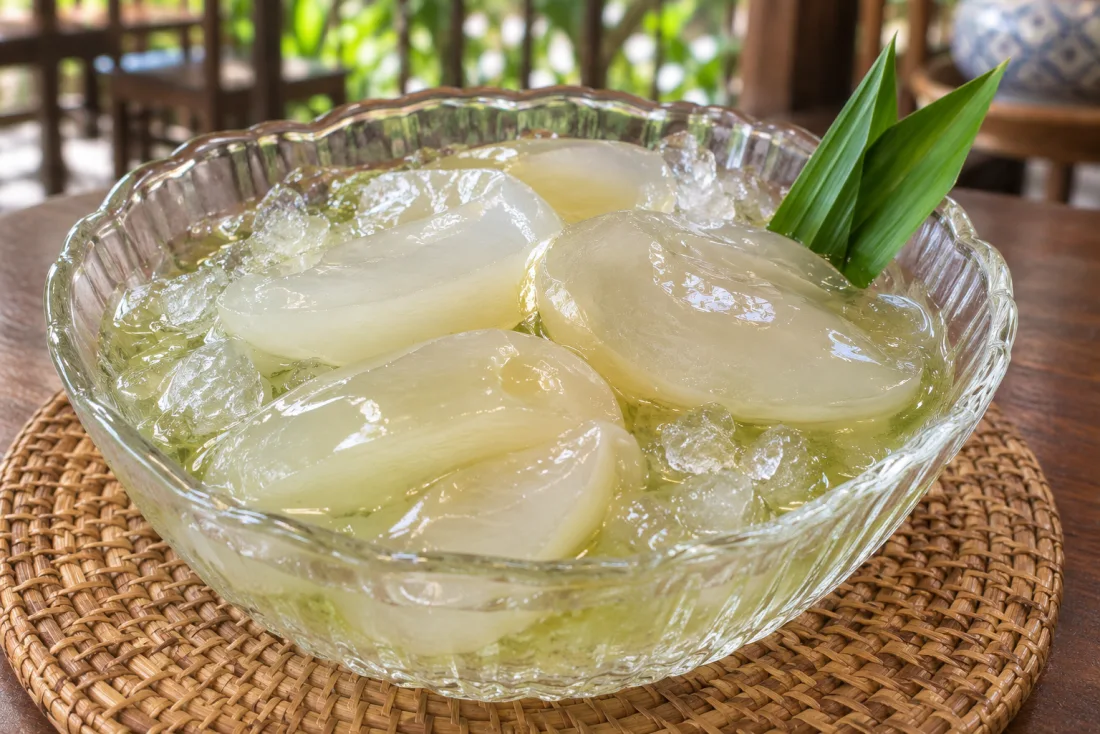

Look tan identifies palmyra fruit and its tender kernel
Look tan can identify the fruit or its peeled young kernel in a dessert. The translucent pieces in this bowl come from the tender part inside unripe palmyra fruit. Palmyra palm sugar comes from sap and is a different ingredient. The kernel is also distinct from coconut flesh. Ripe palmyra pulp has other uses, including a steamed cake. Look tan loi kaeo points to a syrup preparation, while buat look tan or look tan kati signals a coconut milk version. Ask if the menu only gives the general name.
Phetchaburi palmyra and two Thai dessert preparations
A Phetchaburi university describes local palm growing and young palmyra cooked in syrup. A historical Thai cookery text records young kernels sliced into syrup and used in cold jellies. A Thai home recipe makes the clear syrup version and one with sweet coconut milk. The references show local use and preparations without establishing a single origin for every version. A stall may sell kernels as produce or a dessert that is ready to eat. Sweet syrup is often chilled, and coconut milk can also be served warm.
Tender kernels, pandan and two kinds of sweet liquid
Use prepared kernels or peel off the thin skin first. Clear syrup can use water, sugar and pandan. Ice gradually dilutes the syrup. A coconut milk version can use sugar and a pinch of salt to round out the flavor. Pandan leaves are used for fragrance and can be lifted out. Palmyra palm sugar comes from the flower sap. Recipes do not have to use it. Look for thin translucent slices with some spring when identifying the ingredient.
Peel and slice before adding the syrup or coconut milk
Remove the thin skin and cut the kernel into spoon-size strips or slices. Heat pandan and sugar in water for the syrup, then briefly heat the pieces in it. Remove the leaves, cool and serve with ice if desired. For the coconut version, combine coconut milk with sugar and salt over gentle heat before cooking the fruit pieces through. A long vigorous boil can separate coconut milk. Leave the pieces tender and shaped. Refrigerate a cold preparation before serving.
A springy jelly-like bite and a gently fragrant finish
The kernel is juicy and lightly springy with a mild flavor. A cold bowl of syrup tastes clean and sweet with a faint pandan fragrance. Coconut milk adds richness, and a little salt rounds the sweetness. Thicker pieces keep a more noticeable bite. Taste a slice on its own, then with a little liquid. Tapioca pearls or jelly, when added, give a different texture from the sliced seed kernels.
Allergens in coconut milk, dairy and extra toppings
The clear syrup base can use only palmyra kernels, water, sugar and pandan. Coconut milk adds coconut. Some shaved ice stalls serve palmyra with condensed milk or fresh dairy milk, which contains milk. Ask about any creamers or mixed toppings and whether they contain soy or other ingredients you avoid. Peanuts, sesame and jellies should be checked when part of a mixed dessert. Ask about the syrup, topping and shared spoons or ice equipment before ordering.
If you have a food allergy, tell the restaurant before ordering and ask about ingredients, sauces and shared cooking equipment.