
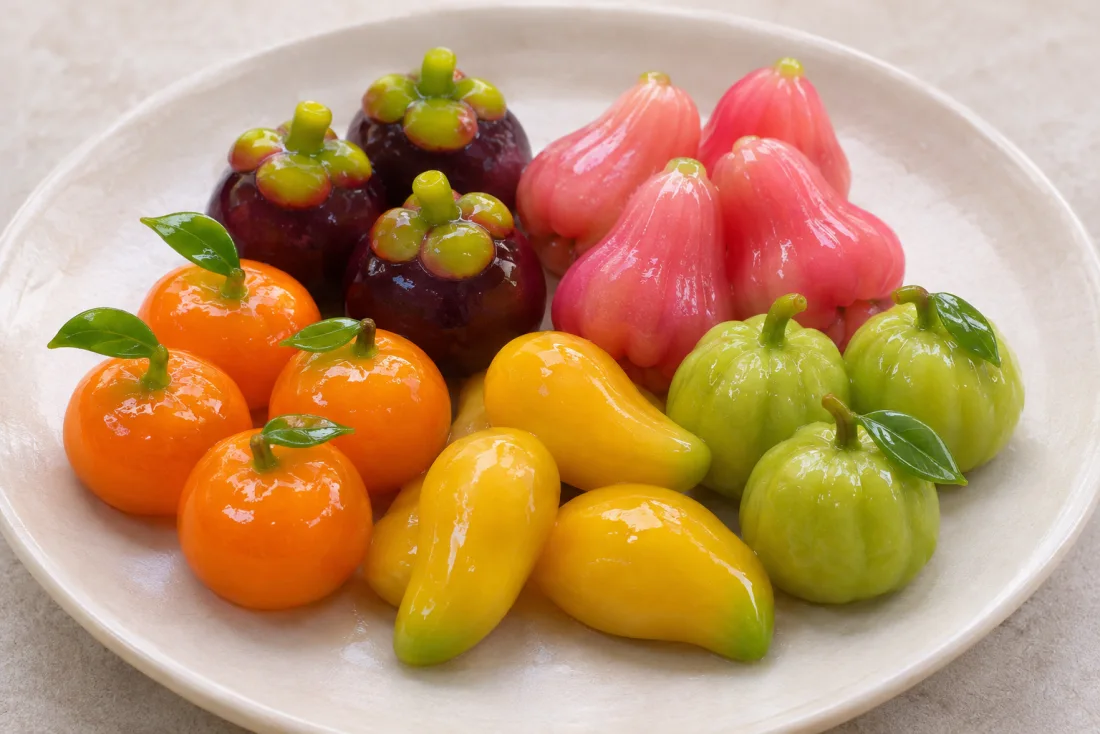

Why these shiny fruits are Thai sweets
Phol and KRUA.CO document mung bean, coconut and sugar versions, and Suan Dusit University has taught the dessert in a workshop. Marzipan sometimes describes the way they are shaped. The reference filling is made from mung beans.
Beans, coconut, sugar and the glaze
Peeled mung beans are cooked and blended with coconut milk and sugar. Colours create the fruit shapes, while agar forms a clear glaze. Several colours can share the same filling. Ask about flavours or decorations before assuming each shape tastes different.
How the filling holds a shape
The bean paste is stirred until it is firm enough to sculpt after cooling. Cooks can paint each piece, dip it in warm agar and allow it to set. More dips can give the surface a thicker bite.
The texture and taste
A fine layer of agar surrounds soft, sweet bean paste. Coconut adds richness. Some versions can add fragrance. The brightness of the paint does not reveal the sweetness or the filling’s flavour.
Mixed boxes and dessert trays
Several shapes can share a takeaway box or a dessert tray. Smaller pieces fit in one bite. Ask about edible decorations, especially stems or other details. The key is the shaped bean filling and its glaze.
Allergens, colours and shared equipment
The reference contains mung beans and coconut. Ask about colour additives, gels, other ingredients and equipment shared with nuts, dairy, wheat or egg. Choosing another colour or peeling off the glaze does not change the filling.
If you have a food allergy, tell the restaurant before ordering and ask about ingredients, sauces and shared cooking equipment.