
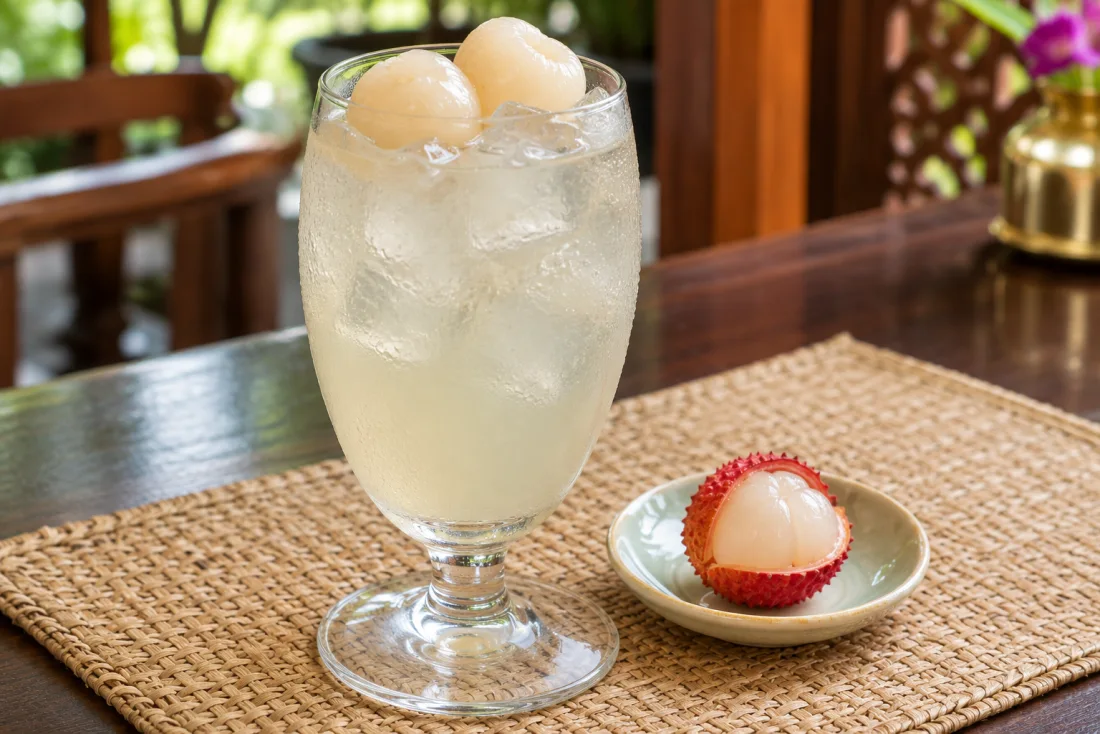

Pale juice and translucent flesh
Lin chi is lychee. The fruit has red skin and pale flesh surrounding a seed. An iced cup can have fruit pieces or clear, pale juice. Red syrup can change the colour. Regular size refers to volume. Ask whether the drink uses fresh fruit, canned fruit or syrup.
Thai fruit-growing regions and drink stalls
Geographical indication records describe lychees from Fang in Chiang Mai and Mae Chai in Phayao. Thai home recipes also use orchard fruit to make drinks. The named growing regions are examples of fruit production. A glass can use different varieties and does not establish where the drink originated.
Fruit, water, sugar and pandan
A documented recipe simmers seeded fresh lychees with pandan. Fruit sweetness varies. Sugar or coloured syrup may be added. Some versions use canned fruit and its syrup. Ask whether the cup contains actual fruit and whether the base is already sweetened.
Remove skins and seeds, then chill
Remove the peel and seed and simmer the flesh with pandan. Cool the liquid and remove the leaves. Add fruit back if wanted and pour over ice. Freshly blended and strained versions may be cloudier. Use a spoon for whole pieces in the glass.
Floral sweetness and juicy flesh
Ripe lychee tastes sweet and gently floral, sometimes with mild acidity. Pandan may add a soft leafy note. Fresh, cooked and canned flesh have different textures. Ice lightens the drink as it melts. The plain version is still, while a lychee soda adds bubbles.
Fruit ingredients, dairy options and shared utensils
Ask about lychee, pandan and other fruit in mixed syrup if needed. Yogurt, creamer or ice cream in some drinks may add dairy. Removing the fruit leaves lychee in the liquid. Check shared strainers, measures or blenders for contact with milk, soy or nuts.
If you have a food allergy, tell the restaurant before ordering and ask about ingredients, sauces and shared cooking equipment.