
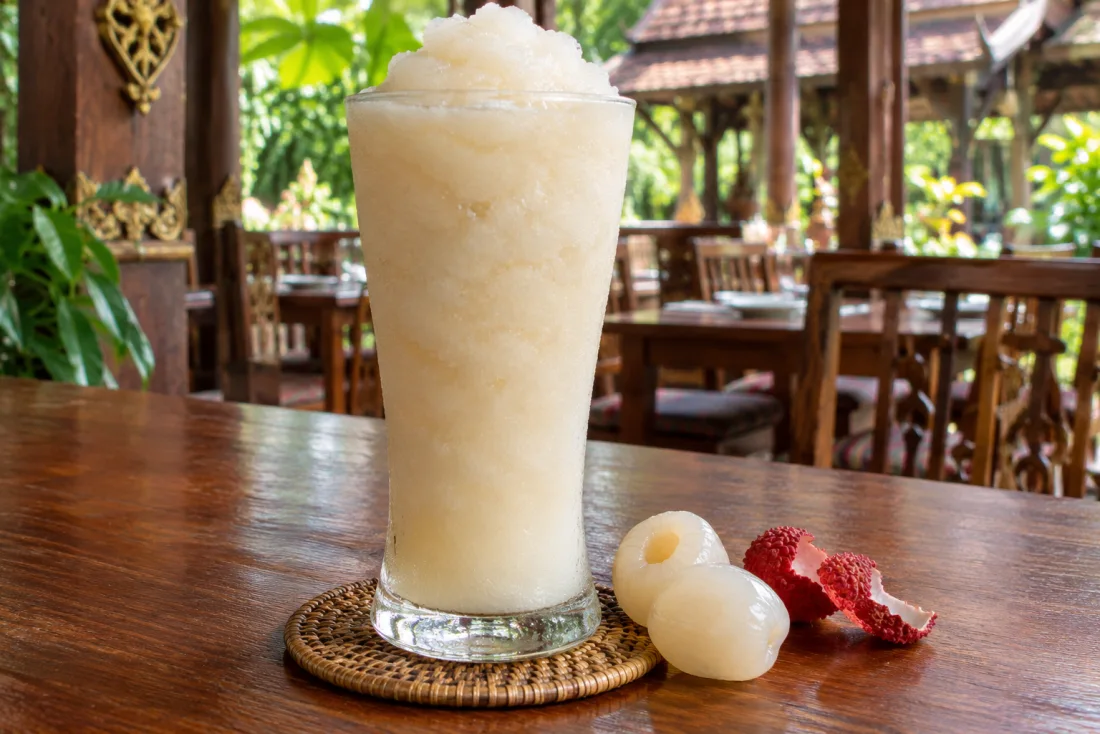

Freshly blended lychee on Thai menus
Linchi pan indicates a blended lychee drink. One Thai fruit stand offers a 22-ounce smoothie. Other merchants describe the flesh they blend in. A large cup and a lot of fruit are separate menu features.
Working with the white flesh
Peel the red shell and remove the hard stone. Translucent flesh breaks into pale pulp as it blends with ice. Frozen flesh can replace some ice. If canned fruit is used, its sweet packing syrup can contribute flavour and sugar.
Floral aroma and fine ice
Ripe lychee gives a rounded sweetness and a fragrant finish, with a little acidity in some fruit. Fine ice chills the drink and soft bits of fruit can remain. Extra syrup can cover the fruit aroma. A slight rise in temperature may make the aroma easier to smell.
Serving a larger drink
Twenty-two ounces is one menu size. A chilled glass and a takeaway cup can hold the same blend. Ice gradually melts, so stir before pouring portions if you want fruit and ice evenly distributed. Optional whole lychees are garnish, not a fixed part of the size.
Juice, soda and milk versions
Juice pours without a suspended ice slurry. Soda has fizz, and a milk or yoghurt shake has a dairy character. A plain fruit shake can also look creamy white. Ask how the shop makes the chosen variant and whether it uses a fruit mix.
Allergens and shared equipment
Fruit and ice need no dairy. Milk, condensed milk, yoghurt or milk foam change that. Soy, nuts or other ingredients may be used in a shared blender. Ask about the canned fruit, syrup and utensils if relevant, and avoid any ingredient that you know you react to.
If you have a food allergy, tell the restaurant before ordering and ask about ingredients, sauces and shared cooking equipment.