
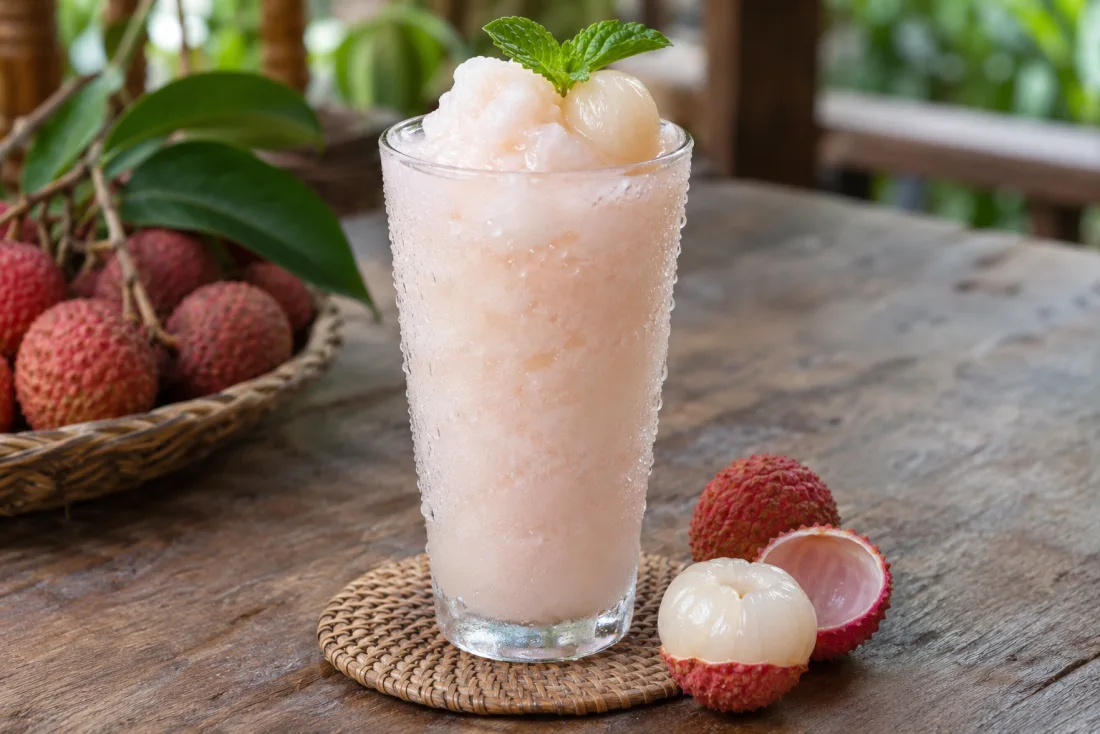

A blended stall drink
The Thai name identifies lychee and the use of a blender. Shops can use ripe fresh lychee in season or work with frozen fruit or lychees packed in syrup.
What is inside
The drink uses the juicy flesh around the hard pit. Remove the shell and pit before blending. The fruit and any light syrup vary with the recipe.
The ice and fruit texture
Fine ice gives the shake its thickness. Soft lychee fibres and droplets of juice stay in the drink. A cold or frozen fruit base can limit dilution.
Gentle perfume and sweetness
Cold comes first, followed by sweet juice, a lightly tart note and floral lychee aroma. Cane syrup, lime or a mint garnish are kitchen choices.
How Thai cafés serve it
A tall glass can hold a peaked slush, while a wide short glass leaves room for soft peeled lychees on the surface. Both show the pale colour of the fruit.
Allergens and dietary needs
Ask if you are allergic to lychee. Condensed milk, dairy or yogurt contain milk, while some substitutes contain soy or nuts. Check toppings, packed fruit and shared blenders.
If you have a food allergy, tell the restaurant before ordering and ask about ingredients, sauces and shared cooking equipment.