

 pork
From branded instant noodles to a wok dish
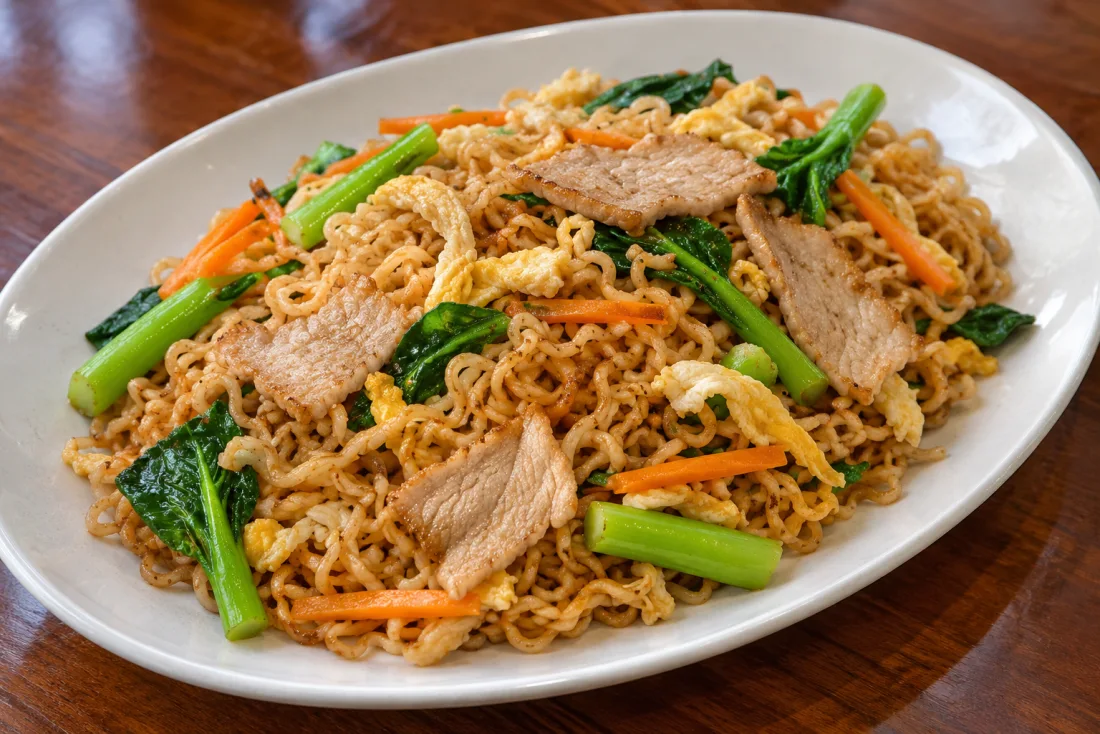
MAMA is a Thai instant noodle brand and appears as a dish name. Kitchens may use another brand. This preparation stirs softened noodles with other ingredients instead of serving them in a full bowl of broth.
Preparing noodles, pork, egg and greens
One home recipe cooks pork and egg and then adds softened noodles, the packet seasoning and Chinese kale. Another uses shrimp tom yum-flavored noodles, pork, egg, broccoli, oyster sauce and a little sugar. Drain the noodles for a drier stir-fry.
Curly noodles, savory pork and egg
The curls can retain a slight spring and hold a thin coating. Pork, egg and greens bring different textures. Tom yum packets can taste sour or spicy, while other packets and added seasonings vary.
Takeaway, one plate and extra egg
The noodles are best eaten while hot. Ask whether a fried egg is an addition to egg already in the wok, whether packets are spicy and whether sauces can be packed separately.
Instant noodle soup, drunken noodles and pad Thai
A regular instant noodle soup has more liquid. Drunken instant noodles can emphasize holy basil, fingerroot and peppercorns. Pad Thai usually uses rice strands and tamarind; ask which noodles the kitchen uses.
Allergens in noodles, packets and wok ingredients
Wheat is common in noodle cakes and added egg contains egg. Flavorings may contain shrimp, fish, soy, wheat, milk or oyster ingredients. Ask for the actual packages and about shared water, strainers and woks. Removing visible toppings does not undo contact.
If you have a food allergy, tell the restaurant before ordering and ask about ingredients, sauces and shared cooking equipment.