

 fish sauce
 optional dried shrimp
Recognising fruit, peanuts and dressing
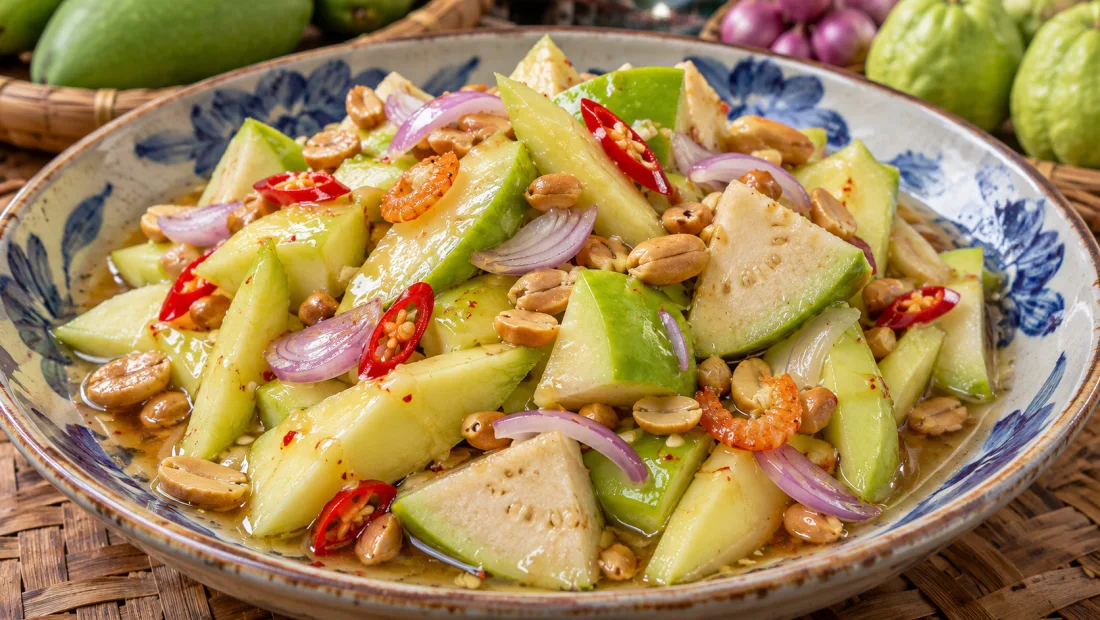
Green mango is pale and firm, while ripe mango is softer and more yellow. Apple, guava or pineapple bring other textures. Whole or crushed roasted peanuts sit over the fruit or in a side dish. Shallot, chili and dried shrimp depend on the version.
How Thai sellers make it
A Nakhon Phanom seller lists mango, apple and guava with roasted peanuts, dried shrimp and shallot. A Thai home cook documents a version with mango and pineapple. Fruit can change with the season. The Thai term for peanut is thua lisong. Cashew is a different ingredient. This salad is tossed rather than pounded as a tam dish might be.
How the dressing and fruit work
Cut firm fruit into similar sizes. Lime, fish sauce, chili and optional sweetness make a typical dressing. The amount of sugar depends on the mango. Roast peanuts can lose crunch after sitting in the dressing, so serve them separately or add them just before serving.
Fruit acidity and roasted aroma
Unripe mango gives crunch and a sharp tang. Ripe mango and pineapple are softer and more aromatic. Peanuts bring toastiness, and dried shrimp can add a savoury note. Chili heat varies. Start with a little dressing to keep the fruit flavour clear.
Ordering and choosing menu photos
Ask what fruit is available and whether toppings are packed separately. A green-mango bowl with apple and guava and a yellow mango and pineapple plate show two possible versions. Choose the serving that matches the fruits and dressing on the menu.
Peanut, shrimp and dressing allergens
Both versions contain peanut. Dried shrimp contains crustaceans and fish sauce contains fish. Other sauces may contain wheat, soy or seafood. Other nuts and shared cutting boards, spoons and mixing bowls can cause cross-contact. Ask about ingredients and whether the dressing and toppings can be handled separately.
If you have a food allergy, tell the restaurant before ordering and ask about ingredients, sauces and shared cooking equipment.