
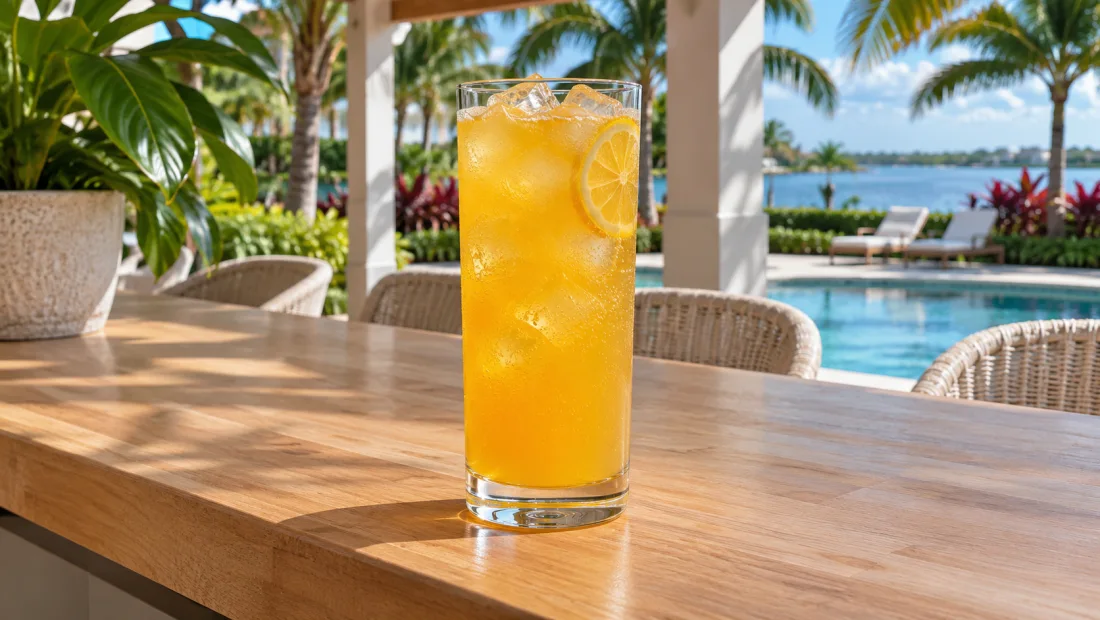

Color and glassware
Purée gives the drink a hazy yellow-orange color. Lemon brings a tart note, and the sparkling version can have visible bubbles. A tall iced glass works for the long drink. The shaker version can come in a short glass with lemon. Check the menu for rum.
Two actual bar recipes
Opal Sands in Florida lists white rum, mango purée, pressed lemon, agave and lemon-lime soda. TGI Fridays Japan lists coconut rum, vodka, sour mix, fresh lemon and mango purée in its shaker. Both are documented contemporary bar drinks.
Fruit and the spirits
Ripe mango purée thickens the mix. Fresh lemon and sour mix supply acidity. White rum is the main spirit in the sparkling version. The shaker uses coconut rum and vodka. Agave and sweet soda affect the sweetness of the first recipe.
Mango aroma and acidity
Mango comes through sweet and ripe, followed by a brighter lemon note. Soda lends a light fizz, and melting ice gradually softens the flavor. The shaker can seem more concentrated and leave a coconut aroma. Sweetness and sourness cannot tell you the drink’s strength.
What to show on a menu
A high glass shows ice and bubbles in the long drink. A short glass with orange-yellow liquid and lemon suits the shaker. List the spirits and actual serving size. Mango lemonade can also describe a non-alcoholic drink, so state clearly which one is offered.
Allergens and shared equipment
Ask about mango and citrus if sensitive to either. Check the coconut rum, sour mix, purée and soda for their actual ingredients. Shakers, strainers and cutting boards may be shared with drinks containing milk or nuts. Both versions here contain alcohol.
If you have a food allergy, tell the restaurant before ordering and ask about ingredients, sauces and shared cooking equipment.