
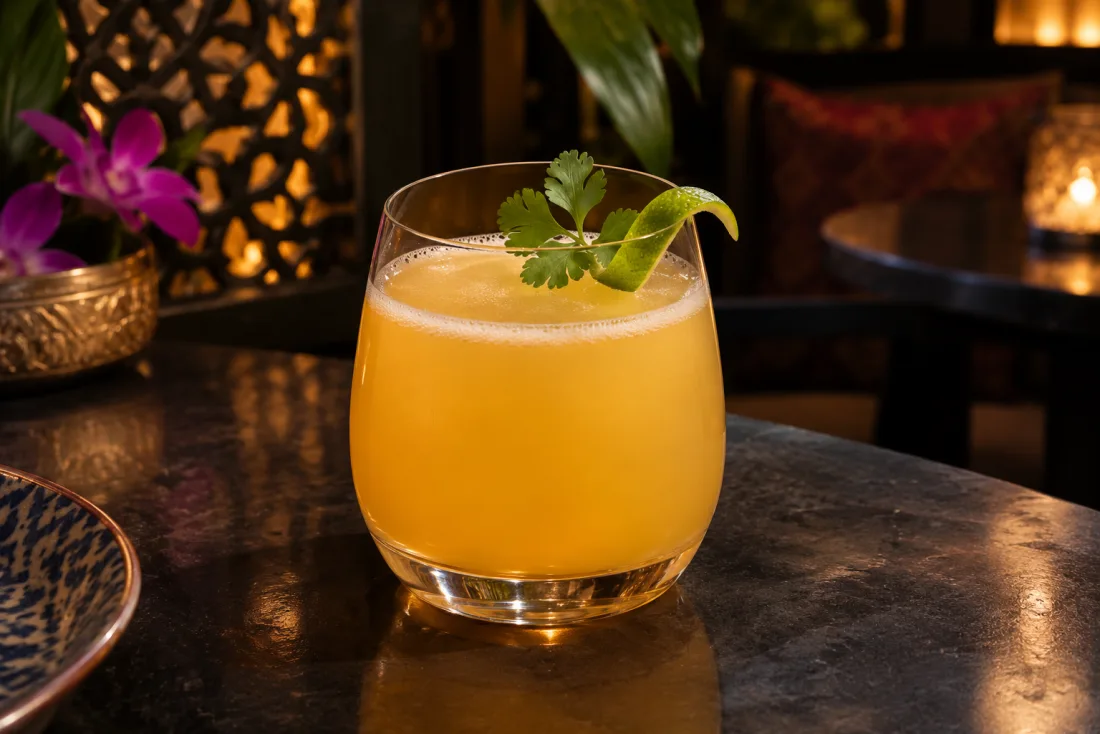

Mango and lime on Thai menus
Mamuang means mango and manao usually means lime. A Bangkok café bar lists rum, mango, coriander and lime. Thai Thai Karon in Phuket pairs mango and lime with rum, salted coconut cream and coconut liqueur. These are distinct house recipes.
Fruit, cane spirit and aromatics
Mango gives ripe sweetness, colour and body. Lime makes the finish bright and tart, and rum supplies the base. Coriander can add a green herbal note. The Phuket version adds a salty coconut layer, coconut liqueur and falernum.
Sweet fruit and bright acidity
Mango tends to come first on the nose. Lime brings a clean sharpness and rum appears after the fruit. Coriander adds a fresh herb note, while coconut cream makes the second version richer. A pale layer or cloudy fruit does not identify dairy or egg by itself.
Shaken and served cold
Shake or chill the fruit, lime and spirit, then pour into a short glass with ice or strain into a stemmed glass. Ice changes dilution. A herb sprig, lime twist or coconut layer can mark the preparation, while glass volume does not determine the spirit measure.
Related mango drinks
A frozen mango shake gets its body from blended ice. A cocktail with mango puree and lime can remain pourable. A Koh Samui recipe adds orange, pineapple and grenadine. Other names can indicate tequila, mint or soda, so check the actual base.
Allergens and alcohol
The rum versions contain alcohol. The salted coconut option contains coconut and may use other liqueurs or syrups. Ask whether a foam or cream uses dairy, egg or another allergen, and ask about shared equipment. Confirm a separate alcohol-free recipe if needed.
If you have a food allergy, tell the restaurant before ordering and ask about ingredients, sauces and shared cooking equipment.